
As a supplier of DC servo motors, I've witnessed firsthand the critical role that encoder resolution plays in the performance of these motors. Encoders are essential components in DC servo motor systems, providing feedback on the motor's position, speed, and direction. The resolution of an encoder refers to the number of discrete positions it can detect within one full rotation of the motor shaft. In this blog post, I'll explore how encoder resolution affects the performance of a DC servo motor and why it's an important consideration for your applications.
Understanding Encoder Resolution
Encoder resolution is typically measured in pulses per revolution (PPR) or counts per revolution (CPR). PPR refers to the number of electrical pulses generated by the encoder for each full rotation of the motor shaft, while CPR takes into account additional factors such as interpolation, which can increase the effective resolution. For example, an encoder with a PPR of 1000 and a 4x interpolation factor would have a CPR of 4000.
A higher encoder resolution means that the encoder can detect smaller changes in the motor's position, providing more precise feedback to the servo controller. This allows the controller to make more accurate adjustments to the motor's speed and torque, resulting in smoother operation, better positioning accuracy, and improved overall performance.
Impact on Positioning Accuracy
One of the most significant ways that encoder resolution affects the performance of a DC servo motor is in its impact on positioning accuracy. In applications where precise positioning is required, such as robotics, CNC machining, and semiconductor manufacturing, a high-resolution encoder is essential.
A low-resolution encoder may not be able to detect small changes in the motor's position, leading to errors in positioning. This can result in parts being machined out of tolerance, robots missing their targets, or other performance issues. On the other hand, a high-resolution encoder can provide the servo controller with accurate feedback on the motor's position, allowing it to make precise adjustments and achieve the desired positioning accuracy.
For example, consider a CNC milling machine that requires a positioning accuracy of ±0.001 inches. A low-resolution encoder with a PPR of 1000 may not be able to provide the necessary precision, resulting in positioning errors that exceed the tolerance. However, a high-resolution encoder with a PPR of 10,000 or more can provide the controller with the detailed feedback needed to achieve the required accuracy.
Impact on Speed Control
Encoder resolution also plays a crucial role in the speed control of a DC servo motor. In applications where constant speed is required, such as conveyor systems, printing presses, and packaging machines, a high-resolution encoder can help maintain a stable speed and reduce speed fluctuations.
A low-resolution encoder may not be able to provide accurate feedback on the motor's speed, leading to variations in speed that can affect the quality of the output. For example, in a printing press, speed fluctuations can cause misregistration of the printed image, resulting in a poor-quality print. A high-resolution encoder, on the other hand, can provide the servo controller with precise information about the motor's speed, allowing it to make adjustments to maintain a constant speed.
In addition, a high-resolution encoder can also improve the dynamic response of the servo system, allowing it to quickly adjust to changes in load or speed requirements. This is particularly important in applications where the motor needs to accelerate or decelerate rapidly, such as in robotics and automation.
Impact on Torque Control
Torque control is another important aspect of DC servo motor performance, especially in applications where the motor needs to provide a constant torque, such as in lifting and hoisting systems, tension control applications, and material handling equipment.
A high-resolution encoder can provide the servo controller with accurate feedback on the motor's position and speed, allowing it to calculate the required torque more precisely. This enables the controller to adjust the motor's torque output to match the load requirements, resulting in more efficient operation and reduced energy consumption.
In contrast, a low-resolution encoder may not be able to provide the necessary information for accurate torque control, leading to over-torquing or under-torquing of the motor. Over-torquing can cause the motor to overheat and wear out prematurely, while under-torquing can result in the motor stalling or not being able to perform its intended function.
Choosing the Right Encoder Resolution
When choosing an encoder for your DC servo motor application, it's important to consider the specific requirements of your application. Factors such as the required positioning accuracy, speed control, torque control, and dynamic response will all influence the choice of encoder resolution.
In general, applications that require high precision and accuracy, such as robotics and CNC machining, will benefit from a high-resolution encoder with a PPR of 10,000 or more. Applications that require less precision, such as conveyor systems and simple automation, may be able to use a lower-resolution encoder with a PPR of 1000 to 5000.
It's also important to consider the cost of the encoder when making your decision. High-resolution encoders are typically more expensive than low-resolution encoders, so you'll need to balance the performance requirements of your application with the cost of the encoder.
Our DC Servo Motor Solutions
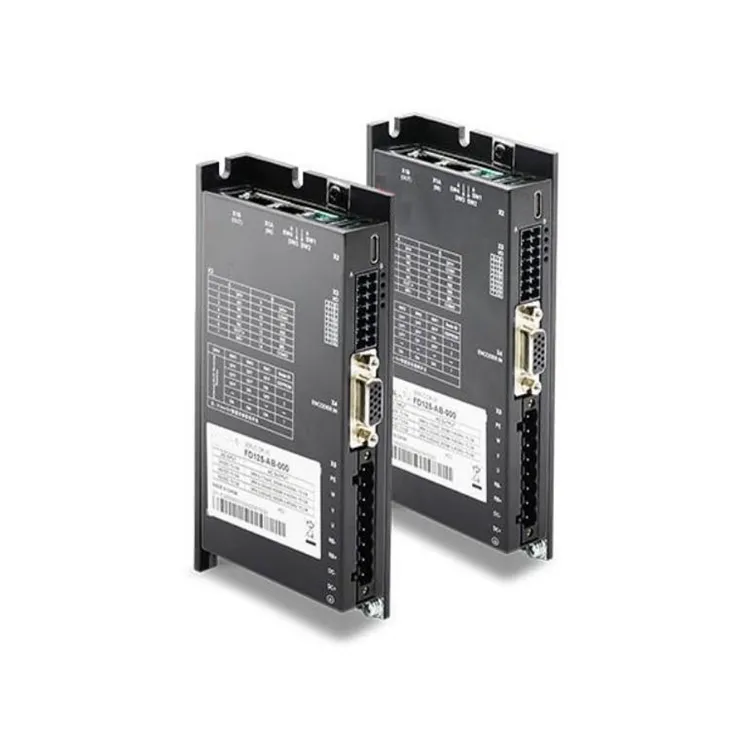
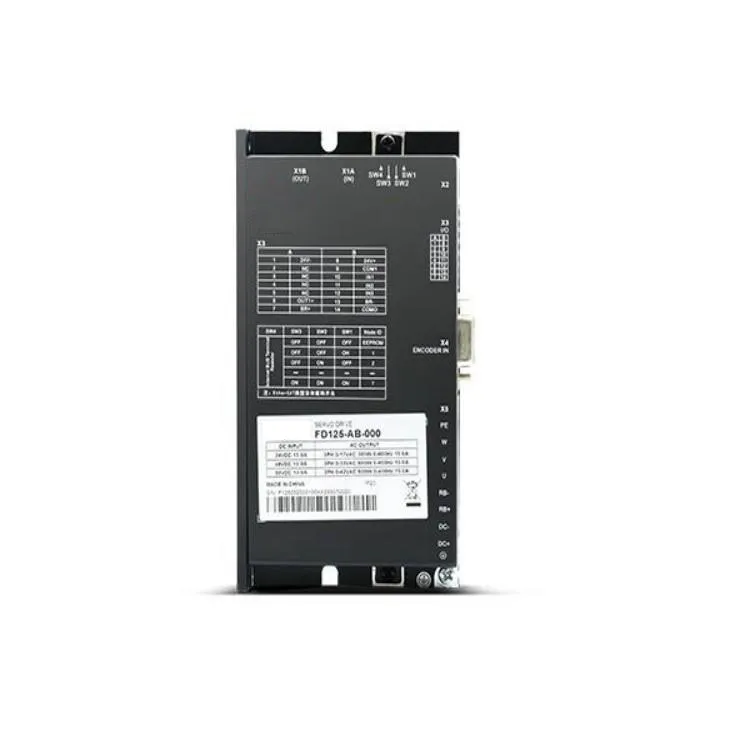
As a supplier of DC servo motors, we offer a wide range of products with different encoder resolutions to meet the needs of various applications. Our DC Servo Driver is designed to work seamlessly with our DC servo motors, providing precise control and excellent performance.
We also offer a Mini DC Servo Driver for applications where space is limited, and a Low-voltage Servo Motor for applications that require a lower power supply.
If you're looking for a reliable and high-performance DC servo motor solution, we'd be happy to help. Our team of experts can work with you to understand your specific requirements and recommend the best encoder resolution and motor configuration for your application.
Conclusion
In conclusion, encoder resolution is a critical factor in the performance of a DC servo motor. A high-resolution encoder can provide more precise feedback on the motor's position, speed, and torque, resulting in better positioning accuracy, smoother operation, and improved overall performance. When choosing an encoder for your application, it's important to consider the specific requirements of your application and balance the performance requirements with the cost of the encoder.
If you have any questions or would like to learn more about our DC servo motor solutions, please don't hesitate to contact us. We look forward to working with you to find the best solution for your needs.
References
- "Encoder Basics: Understanding Encoder Resolution and Accuracy," by Motion Control Tips
- "Servo Motor Basics: How Encoders Affect Performance," by Automation World
- "Choosing the Right Encoder for Your Servo Motor Application," by Machine Design