

In the dynamic landscape of industrial automation, Programmable Logic Controllers (PLCs) have emerged as the cornerstone of efficient and reliable control systems. As a leading supplier of general PLCs, I've witnessed firsthand the transformative impact these devices have on various industries. In this blog post, I'll delve into the numerous advantages of using a general PLC in automation, highlighting how they can enhance productivity, flexibility, and cost - effectiveness.
1. High Reliability and Durability
One of the most significant advantages of general PLCs is their exceptional reliability. These devices are designed to operate in harsh industrial environments, where they may be exposed to extreme temperatures, humidity, dust, and electrical noise. Unlike traditional relay - based control systems, PLCs are solid - state devices with no moving parts, which significantly reduces the risk of mechanical failure.
For example, in a manufacturing plant where machinery operates around the clock, a general PLC can ensure continuous and stable operation. It can withstand voltage fluctuations and electromagnetic interference, providing a reliable control solution that minimizes downtime. This reliability translates into increased productivity and reduced maintenance costs, as companies can avoid costly production stoppages due to control system failures.
2. Flexibility and Programmability
General PLCs offer unparalleled flexibility in automation systems. They can be easily programmed to perform a wide range of tasks, from simple logic operations to complex sequential and proportional - integral - derivative (PID) control. This programmability allows engineers to customize the control system according to the specific requirements of each application.
Whether it's controlling a conveyor belt in a warehouse, regulating the temperature in a chemical process, or managing the operation of a robotic arm in a manufacturing facility, a general PLC can be programmed to handle the task efficiently. Moreover, if the process requirements change over time, the PLC program can be modified without the need for extensive hardware changes. This adaptability makes PLCs an ideal choice for industries that require frequent process updates and reconfigurations.
3. Cost - Effectiveness
When it comes to cost, general PLCs are a smart investment for automation projects. Although the initial purchase price of a PLC may seem relatively high compared to some basic control components, the long - term cost savings are substantial.
Firstly, PLCs reduce the need for a large number of relays and other discrete control devices, which can be expensive to purchase, install, and maintain. By centralizing the control functions in a single PLC, companies can simplify the wiring and reduce the overall hardware costs. Secondly, the programmability of PLCs means that they can be reused in different applications, providing a high return on investment. Additionally, the reliability of PLCs reduces the frequency of maintenance and repair, further lowering the operating costs.
4. Easy Troubleshooting and Maintenance
General PLCs are designed with built - in diagnostic features that make troubleshooting and maintenance a breeze. These features allow technicians to quickly identify and isolate faults in the control system. For example, most PLCs have status indicators that provide real - time information about the input and output signals, as well as the internal logic states.
In addition, many PLC programming software packages include diagnostic tools that can display the program execution status, monitor the values of variables, and detect errors in the program code. This makes it easier for technicians to pinpoint the source of a problem and take corrective action promptly. Moreover, since PLCs are modular in design, faulty modules can be easily replaced, minimizing the downtime required for repairs.
5. Scalability
As businesses grow and their automation needs expand, general PLCs offer excellent scalability. They can be easily expanded by adding input/output (I/O) modules, communication modules, or additional processors. This allows companies to start with a small - scale automation system and gradually increase its capacity as needed.
For instance, a small - to - medium - sized manufacturing company may initially install a PLC - based control system for a single production line. As the company grows and adds more production lines, the same PLC can be expanded to control multiple lines, without the need to replace the entire control system. This scalability provides a cost - effective way to meet the changing automation requirements of a business.
6. Enhanced Communication Capabilities
Modern general PLCs are equipped with advanced communication interfaces that enable seamless integration with other devices and systems in the industrial network. They can communicate with human - machine interfaces (HMIs), sensors, actuators, and other PLCs using various communication protocols such as Ethernet, Modbus, and Profibus.
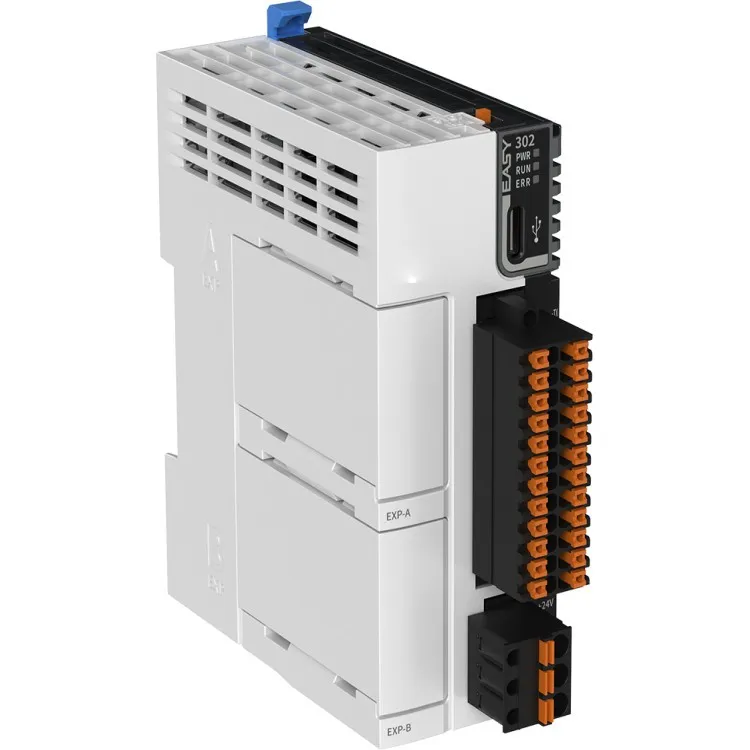
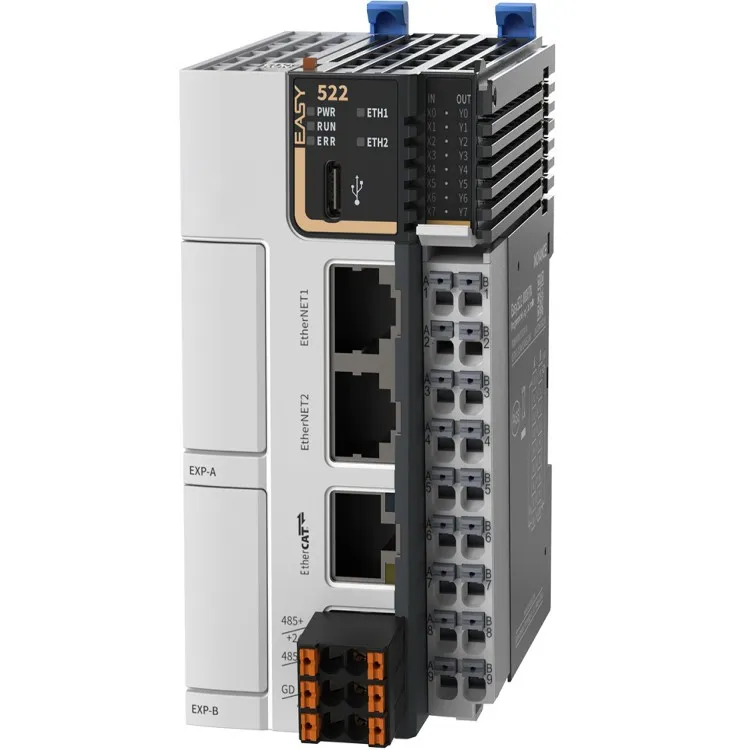
This communication capability allows for real - time data exchange and remote monitoring and control. For example, operators can monitor the status of a PLC - controlled process from a central control room or even from a mobile device. Engineers can also remotely update the PLC program, perform diagnostics, and troubleshoot problems, improving the efficiency of the automation system and reducing the need for on - site visits.
Specific PLC Models and Their Advantages
As a general PLC supplier, we offer a range of PLC models to meet different customer needs. The 485 Pulse PLC is a great choice for applications that require high - speed pulse counting and control. It is suitable for use in packaging machines, printing presses, and other equipment where precise pulse control is essential.
The Compact Mini PLC is designed for space - constrained applications. Despite its small size, it offers powerful control capabilities and can be easily integrated into existing systems. It is ideal for use in small - scale automation projects, such as home automation and laboratory equipment control.
The CAN Bus PLC is optimized for applications that require reliable communication over a Controller Area Network (CAN). It is commonly used in automotive, transportation, and industrial automation systems where high - speed and fault - tolerant communication is crucial.
Conclusion
In conclusion, the advantages of using a general PLC in automation are numerous and significant. From high reliability and flexibility to cost - effectiveness and scalability, PLCs offer a comprehensive solution for modern industrial control systems. Whether you are a small - scale manufacturer looking to automate a single process or a large - scale enterprise seeking to optimize your entire production line, a general PLC can help you achieve your automation goals.
If you are interested in learning more about our general PLC products or would like to discuss your specific automation requirements, please feel free to contact us. Our team of experts is ready to assist you in selecting the right PLC for your application and providing you with the support you need to ensure a successful automation project.
References
- "Programmable Logic Controllers: Principles and Applications" by Michael J. Upton
- "Industrial Automation and Control Systems" by David A. Bell
- Various industry whitepapers on PLC technology and automation trends.