

As a seasoned supplier of Valve Islands, I've witnessed firsthand the crucial role these components play in industrial automation. Valve islands are essentially a collection of valves grouped together, often mounted on a common manifold, and are used to control the flow of fluids or gases in various industrial processes. Safety is of utmost importance in any industrial setting, and valve islands are no exception. In this blog, I'll delve into the key safety features of valve islands that make them a reliable choice for industrial applications.
Redundancy and Fault Tolerance
One of the primary safety features of valve islands is redundancy. Redundancy refers to the inclusion of extra components or systems that can take over in the event of a failure. In valve islands, redundancy can be achieved in several ways. For example, some valve islands are designed with dual solenoids for each valve. If one solenoid fails, the other can still operate the valve, ensuring that the process continues without interruption.
Another form of redundancy is the use of redundant power supplies. Valve islands typically require electrical power to operate the solenoids. By providing multiple power sources, the risk of a complete power failure is minimized. If one power supply fails, the other can still provide the necessary power to keep the valve island functioning.
Fault tolerance is closely related to redundancy. It refers to the ability of a system to continue operating in the presence of faults. Valve islands are often designed with self-diagnostic capabilities that can detect faults in the system, such as a failed solenoid or a broken wire. Once a fault is detected, the valve island can take appropriate action, such as shutting down the affected valve or sending an alarm signal to the control system.
Pressure and Temperature Monitoring
Valve islands are often used in applications where the pressure and temperature of the fluid or gas being controlled are critical. To ensure safety, many valve islands are equipped with pressure and temperature sensors. These sensors continuously monitor the pressure and temperature of the system and can trigger an alarm if the values exceed the predefined limits.
For example, if the pressure in a hydraulic system exceeds the safe operating limit, the pressure sensor in the valve island can detect this and send a signal to the control system. The control system can then take appropriate action, such as shutting down the pump or opening a relief valve to reduce the pressure. Similarly, if the temperature of the fluid or gas exceeds the safe limit, the temperature sensor can trigger an alarm and initiate a cooling process.
Emergency Stop and Lockout/Tagout
In industrial settings, it's essential to have a way to quickly stop the operation of a valve island in case of an emergency. Most valve islands are equipped with an emergency stop button that can be used to immediately shut down all the valves in the island. This feature provides a fast and reliable way to stop the flow of fluid or gas in the system, preventing potential accidents.
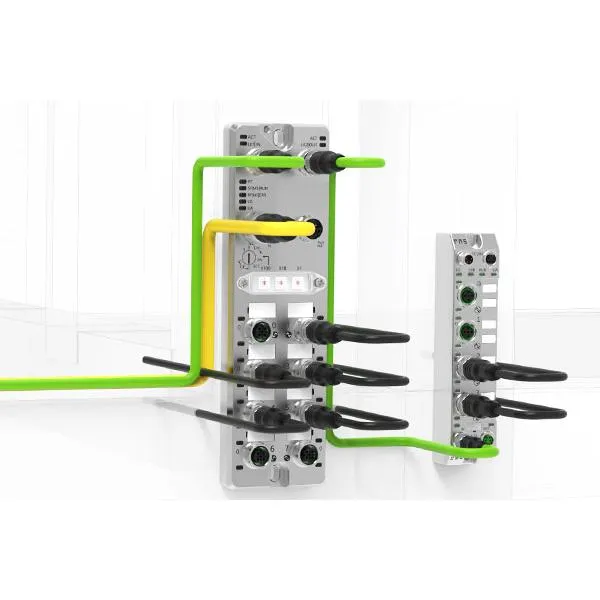

Lockout/tagout is another important safety feature. It refers to the procedure of locking and tagging out equipment to prevent unauthorized operation during maintenance or repair. Valve islands can be designed with lockout/tagout mechanisms that allow the operator to lock the valves in a specific position and tag them to indicate that maintenance is being performed. This ensures that the valves cannot be accidentally opened or closed during the maintenance process, protecting the safety of the maintenance personnel.
Electrical Safety
Since valve islands rely on electrical power to operate, electrical safety is a major concern. To ensure the safety of the operators and the equipment, valve islands are designed with several electrical safety features. For example, they are often equipped with overcurrent protection devices, such as fuses or circuit breakers, to prevent damage to the solenoids and other electrical components in case of a short circuit or overload.
In addition, valve islands are designed to meet strict electrical safety standards, such as UL (Underwriters Laboratories) or CE (Conformité Européene) certifications. These certifications ensure that the valve islands have been tested and approved for safe use in industrial environments.
Communication and Integration with Safety Systems
Valve islands are increasingly being integrated with industrial safety systems to provide a higher level of safety. For example, they can be connected to an IO-Link Master, which allows for communication between the valve island and the control system. The IO-Link Master can receive data from the valve island, such as the status of the valves and the readings from the sensors, and transmit this data to the control system.
Valve islands can also be integrated with other safety devices, such as emergency stop switches and safety light curtains. By integrating with these devices, the valve island can respond to safety events in a coordinated manner. For example, if an emergency stop switch is pressed, the valve island can immediately shut down all the valves in the system.
Network Safety
In modern industrial automation, valve islands are often connected to a network, such as an Ethernet network. This allows for remote monitoring and control of the valve islands. However, network connectivity also introduces new security risks. To ensure network safety, valve islands are designed with features such as firewalls and encryption.
Firewalls are used to prevent unauthorized access to the valve island's network. They can block incoming and outgoing network traffic based on predefined rules, such as allowing only traffic from trusted sources. Encryption is used to protect the data transmitted over the network. By encrypting the data, the risk of data interception and manipulation is minimized.
Modular Design for Easy Maintenance and Safety Upgrades
The modular design of valve islands is another important safety feature. Modular valve islands consist of individual valve modules that can be easily removed and replaced. This makes maintenance and repair of the valve island much easier and safer. If a valve module fails, it can be quickly replaced without having to shut down the entire system.
In addition, the modular design allows for easy safety upgrades. As new safety technologies become available, the valve island can be upgraded by simply replacing the old modules with new ones. This ensures that the valve island can always meet the latest safety standards.
Conclusion
Valve islands are an essential component in industrial automation, and safety is a top priority. The safety features of valve islands, such as redundancy, pressure and temperature monitoring, emergency stop, electrical safety, communication with safety systems, network safety, and modular design, make them a reliable and safe choice for industrial applications.
If you're in the market for valve islands and are looking for a supplier that can provide high-quality products with advanced safety features, I encourage you to contact us for a consultation. Our team of experts can help you select the right valve island for your specific application and ensure that it meets all your safety requirements.
References
- Industrial Automation Handbook
- Safety Standards for Valve Islands (UL, CE, etc.)
- Technical Documentation from Valve Island Manufacturers