
Hey there! As a supplier of Counter Sensors, I often get asked about the rise time of these nifty devices. So, let's dive right in and break down what the rise time of a counter sensor is all about.
First off, what's a counter sensor? A Counter Sensor is a type of optoelectronic sensor that's used to count objects passing by a certain point. It's super useful in all sorts of industries, from manufacturing to logistics. You can learn more about it on our website: Counter Sensor.
Now, let's talk about rise time. In simple terms, the rise time of a counter sensor is the time it takes for the sensor's output signal to go from a low level (usually 10% of its maximum value) to a high level (usually 90% of its maximum value) when it detects an object. It's like how fast a light bulb goes from being off to being fully on when you flip the switch.
Why does rise time matter? Well, a fast rise time is crucial in applications where you need to detect objects quickly and accurately. For example, in a high - speed production line, objects are moving really fast. If the counter sensor has a slow rise time, it might miss some objects or give inaccurate counts. On the other hand, a sensor with a fast rise time can keep up with the rapid movement of objects and provide reliable counting data.
Let's take a look at how the rise time is measured. To measure the rise time of a counter sensor, you typically use an oscilloscope. You expose the sensor to a fast - moving object or a pulse signal and then observe the output signal on the oscilloscope. The oscilloscope will show you the waveform of the output signal, and you can measure the time it takes for the signal to rise from 10% to 90% of its maximum amplitude.
There are a few factors that can affect the rise time of a counter sensor. One of the main factors is the type of sensing technology used. Different sensing technologies, such as infrared, laser, or ultrasonic, have different response times. For example, laser - based counter sensors generally have a faster rise time compared to infrared ones because lasers can detect objects more quickly and precisely.
The environment in which the sensor is used also plays a role. If the sensor is exposed to a lot of dust, moisture, or electromagnetic interference, it can slow down the rise time. Dust particles can block the sensor's light beam or interfere with the signal, while moisture can cause electrical problems. Electromagnetic interference can also distort the sensor's output signal and increase the rise time.
Another factor is the design of the sensor itself. Sensors with high - quality components and advanced circuitry tend to have faster rise times. A well - designed sensor will have a low - noise amplifier and a fast - acting comparator, which can help to speed up the response time.
Now, let's compare the rise time of counter sensors with other types of optoelectronic sensors. For instance, Colour Sensor and Contrast Sensor have different functions and rise times. A colour sensor is used to detect the colour of an object, and its rise time might be different depending on the complexity of the colour detection algorithm. A contrast sensor, which is used to detect differences in contrast between an object and its background, also has its own rise - time characteristics. Generally, counter sensors are optimized for fast object counting, so they often have a relatively fast rise time compared to sensors with more complex functions.
When choosing a counter sensor, the rise time should be one of the key considerations. You need to match the rise time of the sensor with the speed of your application. If you're working with a slow - moving production line, a sensor with a slightly slower rise time might be sufficient. But for high - speed applications, you'll definitely want a sensor with a fast rise time.
In addition to rise time, there are other performance parameters of counter sensors that you should also pay attention to. For example, the sensitivity of the sensor determines how well it can detect objects. A more sensitive sensor can detect smaller or less reflective objects. The range of the sensor is also important. It tells you how far away the sensor can detect objects.
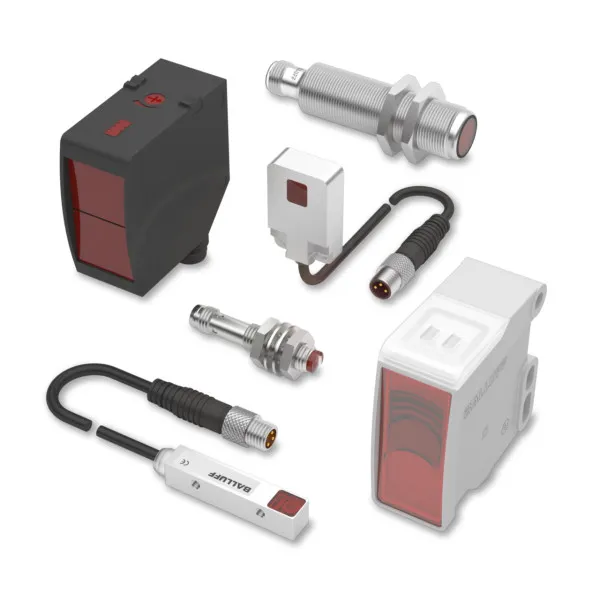
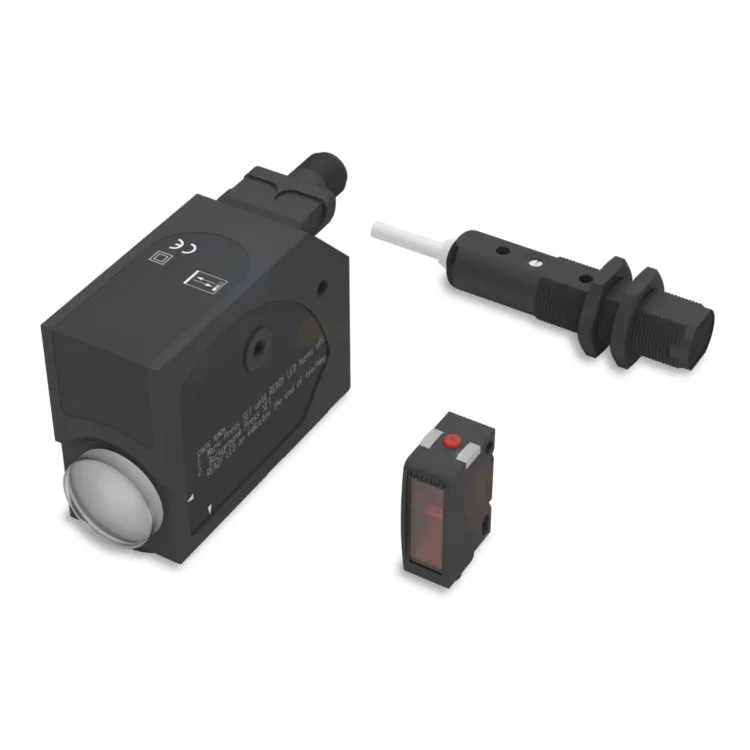
We, as a counter sensor supplier, understand the importance of these performance parameters. That's why we offer a wide range of counter sensors with different rise times, sensitivities, and ranges. Whether you're in a small - scale workshop or a large - scale industrial plant, we can provide you with the right sensor for your needs.
If you're in the market for a counter sensor, don't hesitate to reach out to us for more information. We can help you choose the best sensor based on your specific application requirements. Our team of experts is always ready to answer your questions and provide you with technical support. Whether you need a sensor with a super - fast rise time for a high - speed production line or a more cost - effective option for a slower - paced operation, we've got you covered.
So, if you're looking to improve the efficiency and accuracy of your object - counting process, consider the rise time of the counter sensor and get in touch with us. We're confident that we can provide you with a solution that meets your needs and exceeds your expectations.
References
- Optoelectronic Sensor Handbook
- Industrial Automation Sensor Guide