
The integration of Internet of Things (IoT) technology has revolutionized the renewable energy sector, enabling enhanced monitoring, control, and optimization of renewable energy systems. In this context, the role of an IoT gateway becomes crucial. As an IoT Gateway supplier, I am deeply involved in the exploration and application of this technology within the renewable energy IoT ecosystem. This blog aims to delve into whether an IoT gateway can be effectively used in a renewable energy IoT system, exploring its functions, benefits, and practical applications.
Understanding the Basics: IoT Gateway and Renewable Energy IoT System
Before discussing the compatibility of an IoT gateway with a renewable energy IoT system, it is essential to understand what each component entails.
An IoT gateway serves as a bridge between IoT devices and the cloud or other management systems. It collects data from various IoT sensors and devices, aggregates it, and then transfers it to the cloud for further analysis. It also provides the necessary protocol translation between different communication protocols used by devices, ensuring seamless data flow. Additionally, it can perform local data pre - processing and filtering, reducing the amount of data that needs to be transmitted and improving the overall efficiency of the system.
On the other hand, a renewable energy IoT system is designed to monitor, manage, and optimize the generation, storage, and distribution of renewable energy sources such as solar, wind, hydro, and biomass. It consists of a network of sensors installed on renewable energy assets, such as solar panels, wind turbines, and energy storage systems, which collect data on parameters like power output, temperature, humidity, and wind speed. This data is then used to make informed decisions about energy production, maintenance, and grid integration.
Functions of an IoT Gateway in a Renewable Energy IoT System
Data Aggregation and Transmission
Renewable energy systems are often equipped with a large number of sensors, each generating its own stream of data. These sensors can be located in different parts of a solar farm, wind park, or other renewable energy installations. An IoT gateway can collect data from all these sensors, aggregate it into a more manageable format, and then transmit it to a central server or cloud - based platform. For example, in a large - scale solar power plant, sensors on each solar panel can send data on power generation, temperature, and light intensity to the IoT gateway. The gateway then combines this data and sends it to the control center for real - time monitoring and analysis.
Protocol Translation
Renewable energy IoT devices can use a variety of communication protocols, such as Modbus, ZigBee, Wi - Fi, and LoRaWAN. An IoT gateway acts as a translator, converting the data from one protocol to another as required. This is particularly important in a renewable energy system where different types of devices may be used. For instance, older generation wind turbines may use a proprietary communication protocol, while newer sensors and monitoring devices use more standard protocols. The IoT gateway can ensure that these devices can communicate with each other and with the central management system, facilitating seamless integration of new and existing equipment.
Local Data Processing
In some cases, it may not be necessary or practical to send all the data collected by sensors to the cloud. Some data may be relevant only for local control and decision - making. An IoT gateway can perform local data processing, such as calculating average values, detecting anomalies, and triggering local control actions. For example, if a sensor on a solar panel detects a sudden drop in power output, the IoT gateway can analyze the data locally and send an alert to the on - site maintenance staff without waiting for cloud - based analysis.
Security
Security is a major concern in any IoT system, including renewable energy IoT systems. An IoT gateway can provide a layer of security by acting as a firewall between the IoT devices and the external network. It can authenticate and authorize devices, encrypt data during transmission, and detect and prevent potential cyber - attacks. This is crucial for protecting the integrity and reliability of renewable energy systems, which are often considered critical infrastructure.
Benefits of Using an IoT Gateway in a Renewable Energy IoT System
Improved Efficiency
By aggregating and pre - processing data locally, an IoT gateway can significantly reduce the amount of data that needs to be transmitted to the cloud. This not only saves bandwidth but also reduces the latency associated with cloud - based processing. As a result, real - time monitoring and control of renewable energy systems become more efficient, leading to improved energy production and reduced operational costs.
Enhanced Flexibility
The ability of an IoT gateway to perform protocol translation allows for the integration of different types of devices and systems. This provides renewable energy operators with the flexibility to upgrade and expand their systems without having to replace all existing equipment. For example, they can easily add new sensors or monitoring devices with different communication protocols to an existing renewable energy installation.
Better Decision - Making
The data collected and analyzed by an IoT gateway can provide valuable insights into the performance of renewable energy systems. Operators can use this information to make informed decisions about maintenance schedules, energy storage management, and grid integration. For instance, by analyzing historical data on power output and weather conditions, operators can predict future energy production and optimize the use of energy storage systems.
Remote Monitoring and Control
With an IoT gateway, renewable energy systems can be monitored and controlled remotely. This is particularly useful for large - scale renewable energy installations that are located in remote areas. Operators can access real - time data from anywhere in the world, allowing them to respond quickly to any issues or changes in the system.
Practical Applications of IoT Gateways in Renewable Energy IoT Systems
Solar Power Plants
In solar power plants, IoT gateways can be used to monitor the performance of individual solar panels, track the amount of energy generated, and detect any faults or malfunctions. They can also be used to control the orientation of solar panels to maximize sunlight exposure. For example, by using data on the position of the sun and the power output of solar panels, the IoT gateway can adjust the angle of the panels in real - time.
Wind Farms
In wind farms, IoT gateways can collect data from sensors on wind turbines, such as wind speed, direction, and turbine vibration. This data can be used to optimize the operation of wind turbines, predict maintenance needs, and ensure the safety of the equipment. Additionally, the IoT gateway can communicate with the grid to balance the power output of the wind farm with the demand.
Energy Storage Systems
IoT gateways play a crucial role in energy storage systems, such as batteries. They can monitor the state of charge, temperature, and health of the batteries, and control the charging and discharging processes. This helps to extend the lifespan of the batteries and improve the overall efficiency of the energy storage system.
Compatibility with Different HMIs
When integrating an IoT gateway into a renewable energy IoT system, it is important to consider its compatibility with different Human - Machine Interfaces (HMIs). HMIs are used by operators to monitor and control the renewable energy system. There are several types of HMIs available, each with its own features and applications.
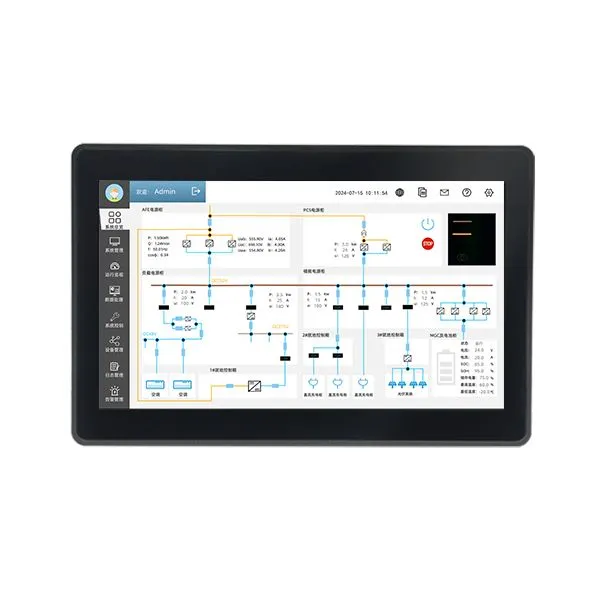
- Waterproof Touch Screen: For renewable energy installations located in outdoor or wet environments, a Waterproof Touch Screen HMI can be a great choice. It allows operators to interact with the system even in harsh weather conditions, ensuring continuous monitoring and control.
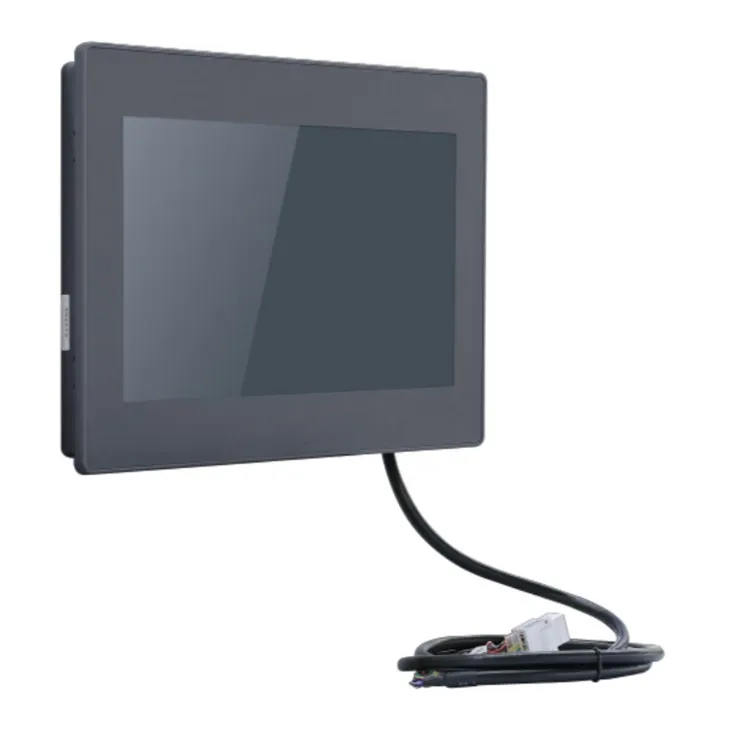
- Split Industrial HMI: A Split Industrial HMI provides flexibility in terms of installation and operation. It can be used in large - scale renewable energy installations where the control panel needs to be separated from the display unit for better ergonomics and safety.
- Wide Temperature HMI: In renewable energy systems that are exposed to extreme temperatures, such as in deserts or cold regions, a Wide Temperature HMI can ensure reliable operation. It can withstand a wide range of temperatures without affecting its performance.
Conclusion and Call to Action
In conclusion, an IoT gateway can indeed be effectively used in a renewable energy IoT system. Its functions of data aggregation, protocol translation, local data processing, and security make it an essential component for enhancing the efficiency, flexibility, and reliability of renewable energy systems. The practical applications in solar power plants, wind farms, and energy storage systems further demonstrate its value.
If you are involved in the renewable energy sector and are looking for a reliable IoT gateway solution for your IoT system, we are here to help. Our IoT gateways are designed to meet the specific requirements of renewable energy applications, ensuring seamless integration and optimal performance. Contact us to discuss your needs and explore how our products can benefit your renewable energy project.
References
- Atzori, L., Iera, A., & Morabito, G. (2010). The Internet of Things: A survey. Computer Networks, 54(15), 2787 - 2805.
- Lee, I., & Seshia, S. A. (2017). Introduction to Embedded Systems: A Cyber - Physical Systems Approach. MIT Press.
- Yang, L. T., Chen, J., & Wang, L. (2012). Internet of Things: Recent Developments and Next Steps. Journal of Internet Technology, 13(5), 677 - 682.