
Hey there! As a supplier of stepper systems, I've seen firsthand how crucial it is to have a system that performs at its best. In this blog post, I'll share some tips on how to improve the dynamic performance of a stepper system.
Understanding Stepper Systems
Before we dive into the tips, let's quickly go over what a stepper system is. A stepper system consists of a stepper motor and a driver. The motor converts electrical pulses into discrete mechanical movements, while the driver controls the motor by sending these pulses. There are different types of stepper motors, such as 2 Phase Stepper Motor and 3 Phase Stepper Motor, each with its own characteristics and applications.
Tip 1: Choose the Right Motor
The first step in improving the dynamic performance of a stepper system is to choose the right motor. You need to consider factors like torque, speed, and resolution. For high - speed applications, a motor with a high step rate and good torque - speed characteristics is essential. If you need high precision, a motor with a fine step angle will be more suitable.
For example, if you're working on a 3D printer, you'll need a motor that can provide precise movements. A 2 Phase Stepper Motor might be a great choice as it can offer good resolution and is relatively easy to control. On the other hand, for applications that require more power and smoother operation, a 3 Phase Stepper Motor could be the way to go.
Tip 2: Optimize the Driver
The driver plays a vital role in the performance of the stepper system. A good driver can provide the right amount of current and voltage to the motor, ensuring smooth and efficient operation. You should look for a driver that offers features like microstepping. Microstepping allows the motor to move in smaller increments than a full step, which can improve the smoothness of the motion and reduce vibration.
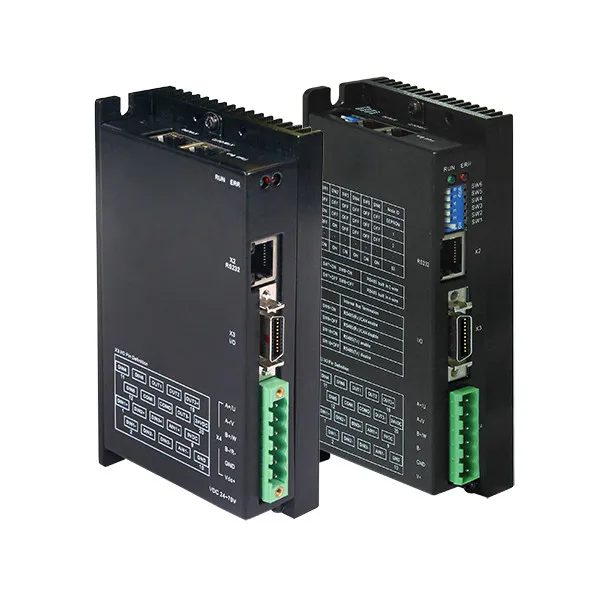
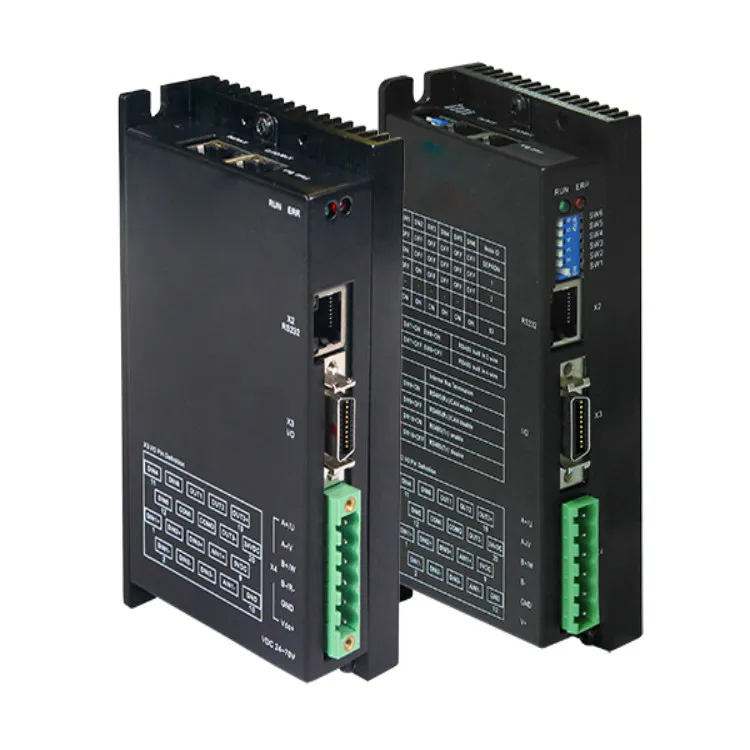
Another important aspect is the ability to adjust the current limit. By setting the appropriate current limit, you can prevent the motor from overheating and also optimize the torque output. A Field Bus Stepper Driver is a great option as it offers advanced control capabilities through a field bus interface, allowing for easy integration into larger control systems.
Tip 3: Proper Mechanical Design
The mechanical design of the system also affects the dynamic performance. You need to ensure that the motor is properly mounted and that there is no excessive backlash in the mechanical components. Backlash can cause errors in the positioning of the motor and reduce the overall accuracy of the system.
Using high - quality bearings and couplings can help to minimize backlash. Also, make sure that the load on the motor is within its rated capacity. Overloading the motor can lead to reduced performance, increased heat generation, and even premature failure.
Tip 4: Control Algorithm Tuning
The control algorithm used to drive the stepper system can have a significant impact on its performance. You can implement algorithms like PID (Proportional - Integral - Derivative) control to improve the accuracy and stability of the system. PID control adjusts the input to the motor based on the error between the desired position and the actual position.
By tuning the PID parameters, you can optimize the response of the system. For example, increasing the proportional gain can make the system respond more quickly to errors, but it can also cause overshoot. So, you need to find the right balance for your specific application.
Tip 5: Feedback and Monitoring
Adding feedback and monitoring to the stepper system can greatly enhance its performance. You can use sensors like encoders to measure the actual position of the motor. The feedback from the encoder can be used to correct any errors in the position and improve the overall accuracy.
Monitoring the temperature and current of the motor can also help you detect potential problems early. If the motor is running too hot or drawing excessive current, it could be a sign of a problem with the system, such as a mechanical issue or an incorrect driver setting.
Tip 6: Power Supply Management
A stable power supply is crucial for the proper functioning of the stepper system. Fluctuations in the power supply can cause the motor to behave erratically and reduce its performance. You should use a power supply that can provide a constant voltage and current within the rated range of the motor and driver.
It's also a good idea to use a power supply with some level of filtering to reduce electrical noise. Electrical noise can interfere with the control signals and cause the motor to misbehave.
Conclusion
Improving the dynamic performance of a stepper system requires a combination of the right components, proper mechanical design, and effective control strategies. By choosing the right motor and driver, optimizing the mechanical design, tuning the control algorithm, adding feedback and monitoring, and managing the power supply, you can achieve a stepper system that performs at its best.
If you're looking to improve the performance of your stepper system or are in the market for a new one, we're here to help. As a trusted supplier of stepper systems, we have a wide range of products and expertise to meet your needs. Feel free to reach out to us to discuss your requirements and start a procurement negotiation.
References
- "Stepper Motor Handbook" by Peter Gutmann
- "Motion Control Basics" by Yaskawa America, Inc.