

In the era of the Internet of Things (IoT), IoT gateways play a pivotal role in connecting various devices, collecting data, and facilitating communication between the edge and the cloud. As an IoT gateway supplier, we understand the importance of optimizing the performance of these gateways to ensure seamless and efficient operation. In this blog, we will explore several key strategies to optimize the performance of an IoT gateway.
1. Hardware Optimization
The foundation of a high - performing IoT gateway lies in its hardware. Selecting the right components can significantly enhance the gateway's processing power, storage capacity, and connectivity.
Processor Selection
A powerful processor is essential for handling the large volume of data generated by IoT devices. When choosing a processor, consider factors such as clock speed, number of cores, and power consumption. For example, multi - core processors can handle multiple tasks simultaneously, improving the overall throughput of the gateway. Processors with low power consumption are also crucial, especially for gateways that need to operate in remote or battery - powered environments.
Memory and Storage
Adequate memory (RAM) is required to store and process data in real - time. Insufficient memory can lead to slow performance and data loss. Additionally, the gateway needs sufficient storage space to store historical data, firmware updates, and configuration files. Solid - state drives (SSDs) are a great choice for storage due to their high read/write speeds and reliability.
Connectivity Options
An IoT gateway should support a wide range of connectivity protocols to communicate with different types of IoT devices. Common protocols include Wi - Fi, Bluetooth, ZigBee, Ethernet, and cellular networks. By offering multiple connectivity options, the gateway can accommodate a diverse set of devices, improving its versatility and performance. For instance, in an industrial setting, Ethernet can be used for high - speed and reliable communication, while Bluetooth can be used for short - range device pairing.
2. Software Optimization
The software running on the IoT gateway is equally important as the hardware. Optimizing the software can improve the gateway's efficiency, security, and functionality.
Operating System Selection
Choosing the right operating system (OS) is crucial for the performance of the IoT gateway. Real - time operating systems (RTOS) are often preferred for applications that require low latency and high reliability, such as industrial automation. Linux - based operating systems are also popular due to their open - source nature, wide range of available software packages, and strong community support.

Firmware Updates
Regular firmware updates are essential to keep the IoT gateway up - to - date with the latest security patches, bug fixes, and performance improvements. Automated firmware update mechanisms can be implemented to ensure that the gateway is always running the latest version of the firmware without manual intervention.
Data Management and Processing
Efficient data management and processing are key to optimizing the performance of the IoT gateway. The gateway should be able to filter, aggregate, and analyze data at the edge to reduce the amount of data transmitted to the cloud. For example, data can be filtered based on predefined rules to remove redundant or irrelevant information. Aggregation techniques can be used to summarize data, making it easier to analyze and store.
3. Security Optimization
Security is a major concern in the IoT ecosystem, and IoT gateways are often targeted by attackers. Optimizing the security of the gateway is crucial to protect the integrity and confidentiality of the data.
Authentication and Authorization
Implement strong authentication and authorization mechanisms to ensure that only authorized devices and users can access the IoT gateway. This can include using secure protocols such as Transport Layer Security (TLS) for communication, and multi - factor authentication for user access.
Encryption
Encrypt all data transmitted between the IoT gateway and the devices, as well as the data stored on the gateway. Encryption algorithms such as Advanced Encryption Standard (AES) can be used to protect the data from unauthorized access.
Intrusion Detection and Prevention
Deploy intrusion detection and prevention systems (IDPS) on the IoT gateway to monitor for any suspicious activity. These systems can detect and block potential attacks in real - time, protecting the gateway and the connected devices.
4. Application - Specific Optimization
Different IoT applications have different requirements, and optimizing the IoT gateway for specific applications can significantly improve its performance.
Industrial Applications
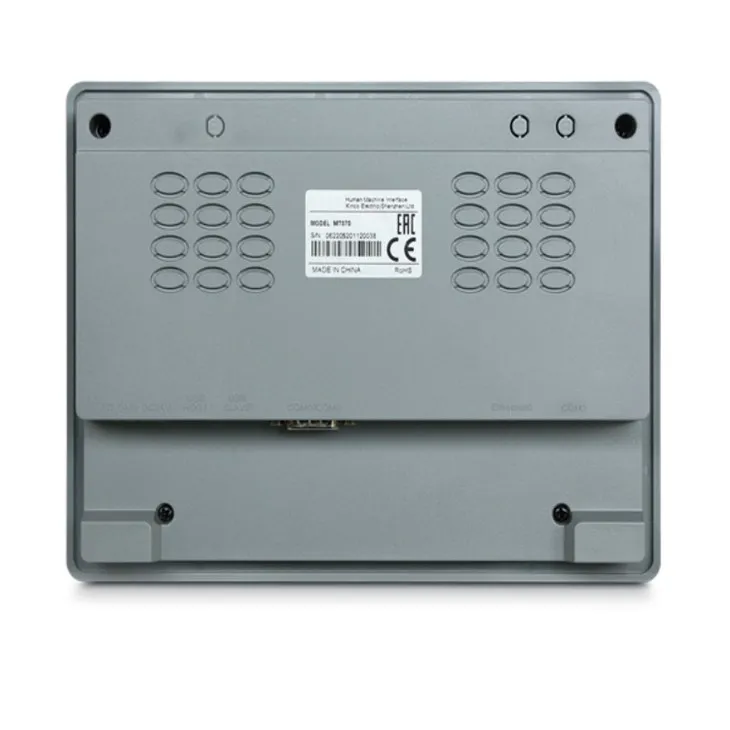
In industrial applications, the IoT gateway needs to be able to handle harsh environments, high - volume data traffic, and real - time control requirements. For example, in an industrial automation setting, the gateway can be integrated with Split Industrial HMI to provide a user - friendly interface for monitoring and controlling industrial processes.
Outdoor Applications
For outdoor applications, the IoT gateway should be able to withstand extreme weather conditions, temperature variations, and physical damage. Outdoor - rated components can be used, and the gateway can be integrated with Outdoor Touch Screen for easy operation in outdoor environments.
Marine and Wet Environments
In marine and wet environments, the IoT gateway needs to be waterproof and corrosion - resistant. Waterproof Touch Screen can be used to ensure reliable operation in such conditions.
5. Monitoring and Analytics
Continuous monitoring and analytics are essential to optimize the performance of the IoT gateway. By collecting and analyzing performance data, we can identify bottlenecks, predict potential issues, and make informed decisions to improve the gateway's performance.
Performance Metrics
Monitor key performance metrics such as CPU utilization, memory usage, network traffic, and data processing time. These metrics can provide valuable insights into the gateway's performance and help identify areas for improvement.
Analytics Tools
Use analytics tools to analyze the performance data and identify trends and patterns. Machine learning algorithms can be applied to predict potential issues and optimize the gateway's configuration based on historical data.
Conclusion
Optimizing the performance of an IoT gateway is a multi - faceted process that involves hardware optimization, software optimization, security optimization, application - specific optimization, and continuous monitoring and analytics. As an IoT gateway supplier, we are committed to providing high - performance gateways that meet the diverse needs of our customers. If you are interested in learning more about our IoT gateways or have specific requirements for your IoT project, we invite you to contact us for a detailed discussion and procurement negotiation.
References
- Atzori, L., Iera, A., & Morabito, G. (2010). The Internet of Things: A survey. Computer Networks, 54(15), 2787 - 2805.
- Lee, I., & Seshia, S. A. (2017). Introduction to Embedded Systems: A Cyber - Physical Systems Approach. MIT Press.
- Tanenbaum, A. S., & Bos, H. (2015). Modern Operating Systems. Pearson.