
Hey there! As a supplier of Handheld HMIs, I've had my fair share of experiences understanding the unique needs in automotive applications. In this blog, I'm gonna dive into what makes Handheld HMIs so special when it comes to the automotive world.
1. Durability and Ruggedness
Let's start with durability. The automotive environment is no walk in the park. Handheld HMIs used in this field are constantly exposed to vibrations, shocks, and temperature variations. You know, when a car is moving, there are all kinds of mechanical vibrations going on. These vibrations can loosen components in a regular device, but our Handheld HMIs are built tough. They're designed with sturdy enclosures and shock - absorbing materials to withstand these vibrations without a hitch.
Temperature is another big factor. Cars can get really hot in the summer and freezing cold in the winter. Our Handheld HMIs are engineered to operate within a wide temperature range. Whether it's a scorching 50 degrees Celsius or a bone - chilling - 20 degrees Celsius, they'll keep on working. This is crucial because automotive technicians or engineers might need to use these devices in all sorts of weather conditions.
And then there's the issue of dust and water. Cars kick up a lot of dust, and rain or spills can happen. That's why having a Waterproof Touch Screen is a must. Our touch screens are not only waterproof but also dust - resistant. They're sealed properly to prevent any dust particles or water droplets from getting inside and causing damage. This ensures that the Handheld HMI remains functional even in the dirtiest of automotive environments.
2. Connectivity
In today's automotive world, connectivity is king. Handheld HMIs need to be able to connect to various systems in the car. For instance, they should be able to connect to the car's diagnostic system. This allows technicians to read error codes, monitor engine performance, and make adjustments. Our Handheld HMIs support a wide range of communication protocols like CAN (Controller Area Network), which is widely used in automotive electronics.
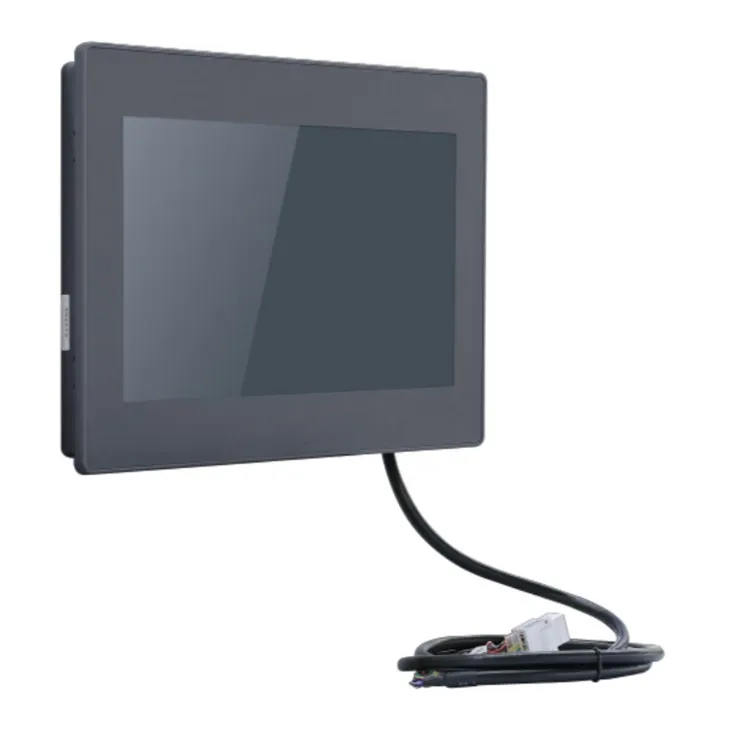
Wi - Fi and Bluetooth connectivity are also important. Wi - Fi allows the Handheld HMI to connect to a local network, which can be useful for accessing software updates or sharing data with other devices. Bluetooth, on the other hand, enables easy pairing with other Bluetooth - enabled devices in the car, such as smartphones or tablets. This way, technicians can transfer data quickly and easily between different devices.
3. User - Friendly Interface
The interface of a Handheld HMI in automotive applications needs to be super user - friendly. Automotive technicians and engineers are busy people, and they don't have time to struggle with a complicated interface. Our HMIs have intuitive touch - screen interfaces that are easy to navigate. The icons are large and clear, and the menus are well - organized.
We also understand that in a noisy automotive environment, visual cues are more important than audio ones. So, our HMIs rely more on visual indicators for things like error messages or system status. For example, a red light might indicate a serious problem, while a green light shows that everything is okay.
4. Power Management
Power management is crucial for Handheld HMIs in automotive applications. These devices need to have a long battery life because technicians might be using them for extended periods without access to a power source. Our Handheld HMIs are designed with energy - efficient components. The display has adjustable brightness settings, so users can reduce the power consumption when they're in a well - lit environment.
We also offer different power - saving modes. For example, if the device is not in use for a certain period, it can automatically go into a sleep mode to conserve battery power. And when it comes to charging, our HMIs support fast charging, so technicians can quickly top up the battery and get back to work.
5. Compatibility with Automotive Systems
Our Handheld HMIs are designed to be compatible with a wide range of automotive systems. Whether it's a luxury sedan or a heavy - duty truck, our devices can work with different makes and models. They can communicate with the car's on - board computers, engine control units, and other electronic systems.
We also keep up with the latest automotive technologies. As new systems are developed, we update our HMIs to ensure compatibility. This means that our customers don't have to worry about their Handheld HMIs becoming obsolete as the automotive industry evolves.
6. Safety Features
Safety is always a top priority in the automotive industry. Our Handheld HMIs have several safety features. For example, they have over - voltage and over - current protection. This protects the device from any electrical surges that might occur in the car's electrical system.
We also ensure that the touch screen is designed in a way that reduces the risk of accidental touches. This is important because in a moving vehicle, the device might be jostled around, and accidental touches could lead to incorrect commands.
7. Application - Specific Functionality
Some automotive applications require specific functionality from the Handheld HMI. For example, in an HVAC system in a car, technicians might need to use a HVAC HMI to monitor and adjust the temperature, airflow, and other parameters. Our Handheld HMIs can be customized to include these application - specific functions.
We can also develop custom software for our HMIs based on the customer's requirements. This allows us to provide a tailored solution for different automotive applications.
Why Choose Our Handheld HMIs?
Well, we've been in the business for a long time, and we know what it takes to make a great Handheld HMI for automotive applications. Our products are reliable, durable, and packed with features that are specifically designed for the automotive industry.
We offer excellent customer support. If you have any questions or run into any issues with our Handheld HMIs, our team of experts is always ready to help. We also provide regular software updates to ensure that your device is always up - to - date with the latest features and security patches.
If you're in the automotive industry and are looking for a high - quality Handheld HMI, we'd love to talk to you. Whether you're an automotive technician, an engineer, or a fleet manager, our Handheld HMIs can meet your needs. Just head over to our Handheld HMI page to learn more about our products. And if you're interested in making a purchase or have any questions about our offerings, don't hesitate to get in touch with us. We're here to help you find the perfect Handheld HMI for your automotive applications.
References
- Automotive Electronics Handbook.
- Industry reports on automotive HMI requirements.
- Technical specifications of various automotive systems.