
In the realm of modern automation and precision control, DC servo motors play a pivotal role. As a trusted DC servo motor supplier, I've witnessed firsthand the diverse applications and unique characteristics of different types of DC servo motors. In this blog, I'll delve into the various types of DC servo motors, their features, and applications, to help you make an informed decision when it comes to your specific requirements.
Permanent Magnet DC Servo Motors
Permanent magnet DC (PMDC) servo motors are one of the most commonly used types in the industry. These motors utilize permanent magnets to create the magnetic field, eliminating the need for a separate field winding. This design results in a simpler and more compact motor structure, making them ideal for applications where space is limited.
The permanent magnets in PMDC servo motors provide a constant magnetic field, which allows for precise control of the motor's speed and torque. They offer high efficiency, good dynamic response, and a wide speed range. These motors are commonly used in robotics, CNC machines, and small automation systems.
One of the key advantages of PMDC servo motors is their ease of control. They can be easily controlled using a DC power supply and a simple control circuit. This makes them a cost - effective solution for many applications. However, the strength of the permanent magnets can be affected by high temperatures, which may lead to a reduction in motor performance over time.
Brushless DC Servo Motors
Brushless DC (BLDC) servo motors are another popular type of DC servo motor. Unlike PMDC motors, BLDC motors do not have brushes and commutators. Instead, they use electronic commutation to control the flow of current in the motor windings.
The absence of brushes in BLDC servo motors offers several advantages. Firstly, it eliminates the problems associated with brush wear and sparking, which improves the reliability and lifespan of the motor. Secondly, BLDC motors have a higher efficiency compared to brushed motors, as there are no brush losses. They also offer better heat dissipation, which allows for higher power densities.
BLDC servo motors are commonly used in applications that require high - speed operation, such as computer hard drives, drones, and electric vehicles. They provide smooth and precise control, making them suitable for applications where accurate positioning is crucial. However, the control of BLDC motors is more complex than that of PMDC motors, as it requires a more sophisticated control algorithm and a dedicated motor controller. You can learn more about DC Servo Driver to understand how to better control these motors.
Coreless DC Servo Motors
Coreless DC servo motors are a specialized type of DC servo motor that features a unique design. In these motors, the armature winding is wound without a iron core. This design eliminates the cogging effect, which is caused by the interaction between the iron core and the magnetic field in traditional motors.
The absence of a core in coreless DC servo motors results in several benefits. They have a very low inertia, which allows for rapid acceleration and deceleration. This makes them ideal for applications that require high - speed and high - precision motion control, such as optical disk drives and medical equipment.
Coreless DC servo motors also offer a high power - to - weight ratio, as the lack of a core reduces the overall weight of the motor. They have a linear torque - speed characteristic, which simplifies the control process. However, coreless DC servo motors are generally more expensive than other types of DC servo motors due to their complex manufacturing process.
Low - voltage DC Servo Motors
Low - voltage DC servo motors are designed to operate at relatively low voltages, typically in the range of 12V to 48V. These motors are commonly used in battery - powered applications, such as portable robots, small unmanned aerial vehicles (UAVs), and handheld tools.
The advantage of low - voltage DC servo motors is their compatibility with battery power sources. They can be easily integrated into battery - powered systems, providing a convenient and portable solution. These motors also offer good efficiency at low voltages, which helps to extend the battery life.
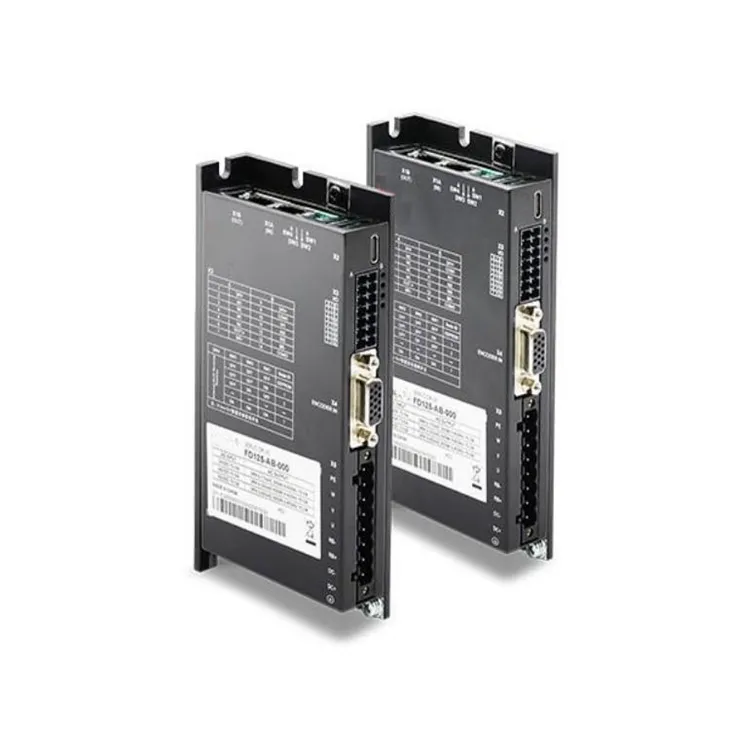
If you are looking for a low - voltage solution, you can explore our Low - voltage Servo Motor options. We offer a wide range of low - voltage DC servo motors that are suitable for various applications.
Integrated Servo Wheels
Integrated servo wheels are a unique type of DC servo motor system. These wheels combine a servo motor, a gearbox, and a wheel into a single unit. They are designed to provide a compact and integrated solution for mobile robots and automated guided vehicles (AGVs).
The integration of the servo motor, gearbox, and wheel in an integrated servo wheel simplifies the design and installation process. It reduces the overall size and weight of the system, while also improving the efficiency and performance. These wheels offer precise speed and torque control, which allows for accurate navigation and movement of the vehicle.
You can find more information about our Integrated Servo Wheel products, which are designed to meet the diverse needs of the robotics and automation industry.
Applications of Different Types of DC Servo Motors
The choice of DC servo motor type depends on the specific requirements of the application. For example, in applications where cost - effectiveness and simplicity are key factors, PMDC servo motors may be the best choice. Their ease of control and relatively low cost make them suitable for small - scale automation projects.
On the other hand, if high - speed operation, reliability, and efficiency are required, BLDC servo motors are a better option. Their brushless design and high - performance characteristics make them ideal for applications such as high - speed manufacturing equipment and electric vehicles.
Coreless DC servo motors are preferred in applications that demand high - precision and rapid motion control. Their low inertia and linear torque - speed characteristic make them suitable for applications such as medical imaging equipment and optical instruments.
Low - voltage DC servo motors are essential for battery - powered applications, where portability and energy efficiency are crucial. They are widely used in consumer electronics and small - scale robotics.
Integrated servo wheels are specifically designed for mobile applications, providing a convenient and integrated solution for the movement of robots and AGVs.
Conclusion
As a DC servo motor supplier, I understand the importance of choosing the right type of motor for your application. Each type of DC servo motor has its own unique features and advantages, and the selection should be based on factors such as cost, performance, reliability, and application requirements.
Whether you need a simple PMDC servo motor for a small automation project, a high - performance BLDC servo motor for a high - speed application, or a specialized coreless, low - voltage, or integrated servo wheel, we have the expertise and products to meet your needs.
If you are interested in our DC servo motor products or have any questions about which type of motor is suitable for your application, please feel free to contact us. We are more than happy to assist you in making the right choice and provide you with the best solution for your project.
References
- "Electric Motors and Drives: Fundamentals, Types, and Applications" by Austin Hughes and Bill Drury.
- "Servo Motors and Industrial Control Theory" by Peter C. Sen.
- Various industry whitepapers and technical documents on DC servo motors.