
What is the acceleration and deceleration performance of a dc servo motor?
In the realm of motion control, DC servo motors stand out as a cornerstone technology, powering countless applications across various industries. As a dedicated DC servo motor supplier, I've witnessed firsthand the critical role these motors play in achieving precise and efficient motion. One of the most important aspects of a DC servo motor's performance is its acceleration and deceleration capabilities. In this blog post, I'll delve into the intricacies of these performance metrics, exploring what they mean, how they're measured, and why they matter.
Understanding Acceleration and Deceleration in DC Servo Motors
Acceleration refers to the rate at which a DC servo motor can increase its speed from a standstill or a lower speed to a higher speed. Deceleration, on the other hand, is the rate at which the motor can decrease its speed from a higher speed to a lower speed or a complete stop. These two parameters are crucial for applications that require rapid changes in motion, such as robotics, CNC machines, and automated manufacturing systems.
The acceleration and deceleration performance of a DC servo motor is typically measured in terms of angular acceleration or deceleration, which is expressed in radians per second squared (rad/s²). This measurement indicates how quickly the motor can change its angular velocity. For linear applications, the performance is measured in linear acceleration or deceleration, expressed in meters per second squared (m/s²).
Factors Affecting Acceleration and Deceleration Performance
Several factors influence the acceleration and deceleration performance of a DC servo motor. Understanding these factors is essential for selecting the right motor for a specific application and optimizing its performance.
- Torque: Torque is the rotational force produced by the motor. A higher torque motor can generate more force to accelerate or decelerate the load attached to it. The available torque at different speeds determines how quickly the motor can change its speed. For example, in applications where rapid acceleration is required, such as high - speed pick - and - place robots, a motor with high peak torque is necessary.
- Inertia: Inertia is the resistance of an object to changes in its state of motion. The total inertia of the motor and the load it drives affects the acceleration and deceleration performance. A higher inertia load requires more torque to accelerate or decelerate. When selecting a DC servo motor, it's important to match the motor's inertia with the load's inertia to ensure optimal performance. For instance, a large - diameter pulley attached to the motor shaft increases the overall inertia, which may slow down the acceleration and deceleration process.
- Power Supply: The power supply voltage and current capacity can also impact the acceleration and deceleration performance. A higher voltage power supply can provide more electrical power to the motor, allowing it to generate more torque and achieve faster acceleration and deceleration. However, the motor must be rated to handle the voltage and current provided by the power supply.
- Control System: The control system of the DC servo motor plays a vital role in determining its acceleration and deceleration performance. Advanced control algorithms can optimize the motor's response, allowing for smooth and precise acceleration and deceleration. For example, a well - tuned PID (Proportional - Integral - Derivative) controller can adjust the motor's speed and torque in real - time to achieve the desired acceleration and deceleration profiles.
Measuring Acceleration and Deceleration Performance
To measure the acceleration and deceleration performance of a DC servo motor, specialized test equipment is often used. One common method is to use an encoder, which is a device that measures the angular position and speed of the motor shaft. By recording the change in angular position over time, the angular acceleration or deceleration can be calculated.
Another approach is to use a torque sensor to measure the torque generated by the motor during acceleration and deceleration. By combining the torque data with the inertia of the load, the acceleration and deceleration rates can be determined.
In some cases, motion control software can also be used to monitor and analyze the motor's performance. This software can provide real - time data on the motor's speed, torque, and acceleration, allowing for detailed performance evaluation and optimization.
Importance of Acceleration and Deceleration Performance in Applications
The acceleration and deceleration performance of a DC servo motor is crucial in many applications for the following reasons:
- Productivity: In manufacturing and automation applications, fast acceleration and deceleration can significantly reduce cycle times. For example, in a CNC machining center, a motor with rapid acceleration and deceleration can quickly move the cutting tool between different positions, increasing the overall production rate.
- Precision: Precise acceleration and deceleration are essential for applications that require accurate positioning. In robotics, for instance, a robot arm needs to accelerate and decelerate smoothly to reach the desired position with high accuracy. Any overshoot or undershoot during acceleration or deceleration can lead to errors in the final position.
- Energy Efficiency: Optimal acceleration and deceleration can improve energy efficiency. By accelerating and decelerating the motor at the right rates, the energy consumption can be minimized. For example, in elevator systems, a well - controlled acceleration and deceleration of the motor can reduce the overall power consumption.
Our DC Servo Motor Solutions
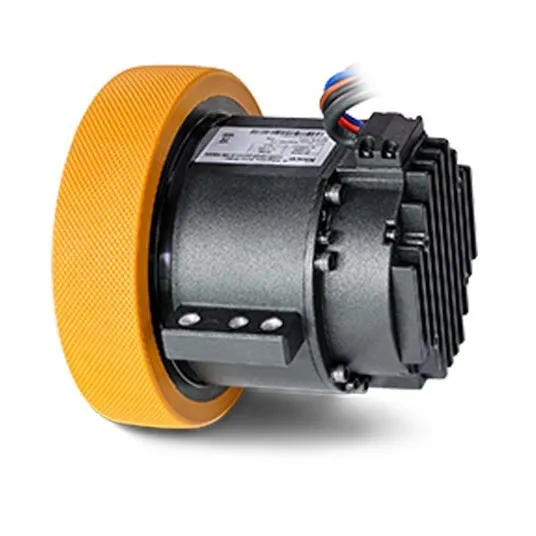
As a DC servo motor supplier, we offer a wide range of products designed to meet the diverse needs of our customers. Our Integrated Servo Wheel combines a high - performance DC servo motor with a wheel, providing a compact and efficient solution for mobile robotics and automated guided vehicles. This product offers excellent acceleration and deceleration performance, allowing for quick and precise movement.
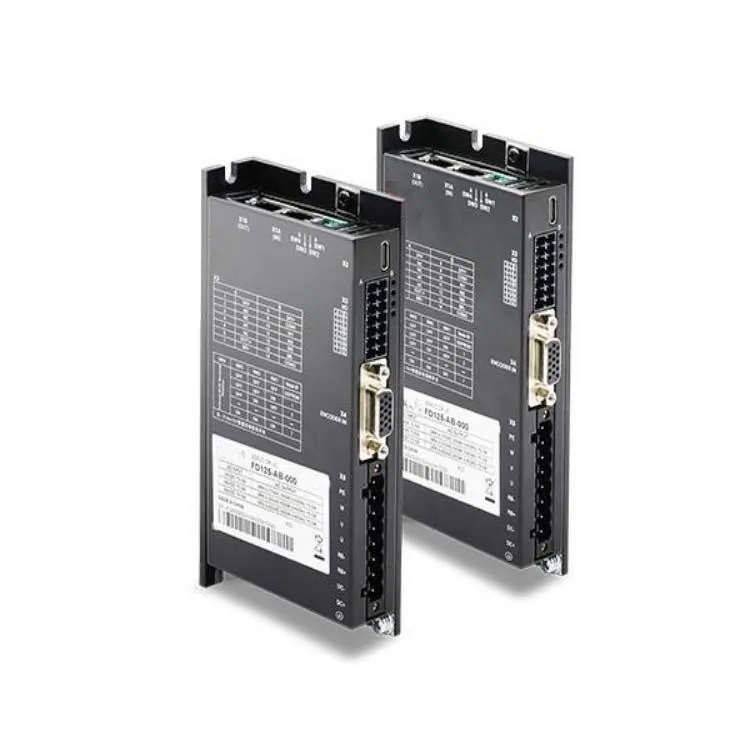
Our Mini DC Servo Driver is a small - sized yet powerful driver that can be paired with our DC servo motors. It features advanced control algorithms that optimize the motor's acceleration and deceleration performance, ensuring smooth and efficient operation.
For applications that require high - torque and direct - drive capabilities, our Frameless Torque Motor is an ideal choice. This motor offers high - speed acceleration and deceleration, along with excellent torque density, making it suitable for demanding industrial applications.
Contact Us for Procurement and Consultation
If you're looking for high - quality DC servo motors with outstanding acceleration and deceleration performance, we're here to help. Our team of experts can assist you in selecting the right motor for your specific application, providing technical support, and offering customized solutions. Whether you're in the robotics, automation, or manufacturing industry, we have the products and expertise to meet your needs.
Feel free to reach out to us to start a discussion about your requirements. We're committed to providing you with the best products and services to ensure the success of your projects.
References
- Dorf, R. C., & Bishop, R. H. (2016). Modern Control Systems. Pearson.
- Krause, P. C., Wasynczuk, O., Sudhoff, S. D., & Pekarek, S. D. (2013). Analysis of Electric Machinery and Drive Systems. Wiley.
- Puchstein, F. C., Lloyd, J. M., & Conrad, A. R. (1954). Alternating - Current Machines. Wiley.