
In the realm of industrial automation, Programmable Logic Controllers (PLCs) play a pivotal role in controlling and monitoring various processes. Communication protocols are the backbone of these PLCs, enabling seamless data exchange between different components of an automation system. Among the numerous communication protocols available, the Controller Area Network (CAN) Bus stands out with its unique features. As a CAN Bus PLC supplier, I am often asked about the differences between CAN Bus and other communication protocols in PLCs. In this blog, I will delve into the intricacies of CAN Bus and compare it with some of the other popular communication protocols used in PLCs.
Understanding CAN Bus in PLCs
CAN Bus is a serial communication protocol that was initially developed for automotive applications. However, its robustness, reliability, and cost - effectiveness have made it a popular choice in industrial automation, especially in PLC systems. CAN Bus uses a multi - master serial communication method, where multiple nodes can communicate on the same bus. It operates on a differential voltage signal, which provides excellent noise immunity, making it suitable for harsh industrial environments.
CAN Bus has a high data transfer rate, up to 1 Mbps, and can support a large number of nodes on a single bus. It also has a built - in error detection mechanism, which ensures the integrity of the data being transmitted. This is crucial in industrial applications where any data loss or error can lead to significant downtime and financial losses.
Comparing CAN Bus with EtherCAT Bus
EtherCAT Bus PLC is another widely used communication protocol in PLCs. EtherCAT, which stands for Ethernet for Control Automation Technology, is based on Ethernet technology. It offers extremely high data transfer rates, with the ability to achieve cycle times in the sub - millisecond range. This makes it ideal for applications that require high - speed real - time control, such as motion control systems.
One of the key differences between CAN Bus and EtherCAT Bus is the data transfer speed. While CAN Bus can reach a maximum data transfer rate of 1 Mbps, EtherCAT can achieve much higher speeds, often in the range of hundreds of Mbps. This means that EtherCAT can handle large amounts of data in a very short time, making it suitable for complex automation systems with a high number of I/O points.
Another difference is the network topology. CAN Bus typically uses a linear bus topology, where all nodes are connected to a single cable. In contrast, EtherCAT can support various network topologies, including linear, star, and tree topologies. This gives more flexibility in designing the automation system layout.
However, EtherCAT has a higher cost compared to CAN Bus. The hardware required for EtherCAT is more expensive, and the implementation is more complex. In addition, EtherCAT is more sensitive to electromagnetic interference compared to CAN Bus, which has better noise immunity due to its differential signaling.
CAN Bus vs. 485 Pulse
485 Pulse PLC uses the RS - 485 communication standard. RS - 485 is a widely used serial communication protocol that is known for its simplicity and low cost. It can support multiple nodes on a single bus and has a relatively long communication distance.
One of the main differences between CAN Bus and RS - 485 is the communication mode. CAN Bus is a multi - master protocol, which means that any node on the bus can initiate communication at any time. In contrast, RS - 485 is a half - duplex, master - slave protocol. This means that only one node (the master) can initiate communication, and the other nodes (the slaves) can only respond to the master's requests.
In terms of data transfer rate, CAN Bus is generally faster than RS - 485. RS - 485 has a maximum data transfer rate of around 10 Mbps, but in practice, the rate is often much lower due to the limitations of the cable length and the number of nodes on the bus. CAN Bus, on the other hand, can achieve a relatively high data transfer rate of 1 Mbps, which is sufficient for many industrial applications.
CAN Bus also has better error handling capabilities compared to RS - 485. CAN Bus has a built - in error detection and arbitration mechanism, which ensures that data is transmitted accurately and efficiently. RS - 485 does not have such a comprehensive error handling mechanism, which means that errors are more likely to occur during data transmission.
Advantages of CAN Bus PLCs
As a CAN Bus PLC supplier, I can attest to the many advantages of using CAN Bus in PLC systems. Firstly, CAN Bus is highly reliable. Its differential signaling and error detection mechanism ensure that data is transmitted accurately, even in harsh industrial environments. This reduces the risk of system failures and downtime.
Secondly, CAN Bus is cost - effective. The hardware required for CAN Bus is relatively inexpensive, and the implementation is straightforward. This makes it an attractive option for small and medium - sized enterprises that want to implement automation systems without incurring high costs.
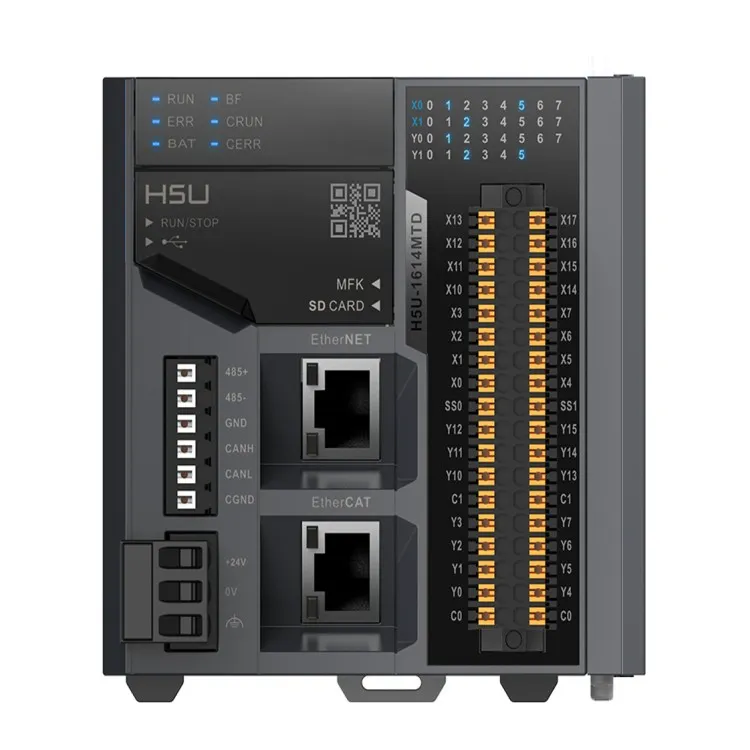
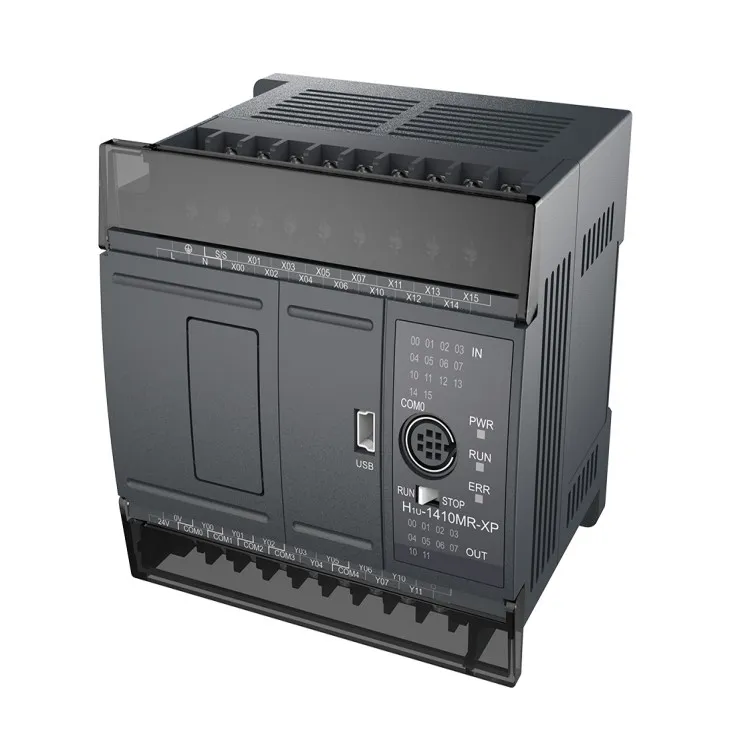
Thirdly, CAN Bus is flexible. It can support a large number of nodes on a single bus, and it can be easily integrated with other communication protocols. This allows for the creation of complex automation systems that can meet the specific needs of different industries.
Applications of CAN Bus PLCs
CAN Bus PLCs are used in a wide range of industrial applications. In the automotive industry, CAN Bus is used for in - vehicle networking, where it enables communication between different electronic control units (ECUs) such as the engine control unit, transmission control unit, and body control module.
In the manufacturing industry, CAN Bus PLCs are used for process control, machine automation, and monitoring. They can be used to control conveyor belts, robotic arms, and other manufacturing equipment.
In the energy sector, CAN Bus PLCs are used for power distribution and management. They can be used to monitor and control the operation of generators, transformers, and other power equipment.
Conclusion
In conclusion, while there are many communication protocols available for PLCs, CAN Bus has its own unique advantages. It offers a good balance between cost, reliability, and performance, making it a suitable choice for many industrial applications. However, the choice of communication protocol ultimately depends on the specific requirements of the automation system, such as the data transfer rate, the number of nodes, the network topology, and the environmental conditions.
If you are considering implementing a PLC system and are interested in learning more about CAN Bus PLC, I encourage you to contact us for a detailed discussion. Our team of experts can help you determine the best communication protocol for your specific needs and provide you with high - quality CAN Bus PLC products. We look forward to the opportunity to work with you in your automation projects.
References
- Dorf, R. C., & Bishop, R. H. (2016). Modern Control Systems. Pearson.
- Ogata, K. (2010). Modern Control Engineering. Prentice Hall.
- International Electrotechnical Commission. (2003). IEC 61158: Industrial communication networks - Fieldbus specifications.