
Hey there! As a CAN Bus PLC supplier, I've gotten a ton of questions about how cable length can mess with the CAN Bus in a PLC network. So, I thought I'd break it down for you in this blog post.
First off, let's talk about what CAN Bus is. CAN, or Controller Area Network, is a popular communication protocol used in all sorts of industrial and automotive applications. It's known for being reliable, fast, and able to handle a lot of data. And when you pair it with a Programmable Logic Controller (PLC), you get a powerful system that can control and monitor all kinds of processes.
Now, let's get into the nitty - gritty of how cable length affects the CAN Bus in a PLC network.
Signal Attenuation
One of the biggest issues with longer cables is signal attenuation. As the electrical signal travels along the cable, it loses strength. The longer the cable, the more the signal weakens. In a CAN Bus system, this can lead to errors in data transmission. You might start getting CRC (Cyclic Redundancy Check) errors, where the receiving end can't verify that the data it received is correct.
Imagine you're shouting a message across a large field. The farther the person you're trying to reach, the harder it is for them to hear you clearly. That's basically what's happening with the CAN Bus signal in a long cable. The strength of the signal drops, and the message can get garbled.
Propagation Delay
Another problem is propagation delay. This is the time it takes for the signal to travel from the sender to the receiver. The longer the cable, the longer this delay. In a PLC network, where real - time control is often crucial, even a small delay can cause issues.
For example, if you have a process that requires immediate response, like a robotic arm movement, a delay in the CAN Bus signal can make the arm move at the wrong time or in the wrong way. It's like sending a text message to someone, but it takes a really long time to reach them. By the time they get the message, the situation has changed.
Reflection
Reflection is also a major concern when dealing with long cables in a CAN Bus system. When the signal reaches the end of the cable, if it's not properly terminated, some of the signal bounces back. These reflected signals can interfere with the original signal, causing more errors.
It's like throwing a ball at a wall. If the wall is smooth and the ball hits it straight on, it bounces back. In a CAN Bus cable, these reflections can create noise and disrupt the data transmission.
How to Mitigate These Issues
So, what can you do to deal with these problems?
Termination
Proper termination is key. A CAN Bus system should have a termination resistor at each end of the bus. This helps to absorb the signal and prevent reflections. It's like putting a soft cushion at the end of the wall so that the ball doesn't bounce back.
Signal Repeaters
You can also use signal repeaters. These devices receive the weakened signal, amplify it, and then re - transmit it. It's like having someone in the middle of the field repeat your message so that the person at the other end can hear it clearly.
Choose the Right Cable
Using high - quality cables with low attenuation is important. Different cables have different characteristics, and some are better suited for long - distance CAN Bus communication. It's like choosing the right running shoes for a long - distance race. You want something that will perform well over a long distance.
Comparing with Other Bus Systems
It's interesting to compare the CAN Bus with other bus systems like the EtherCAT Bus PLC and 485 Pulse PLC.
EtherCAT is known for its high - speed communication and low latency. It can handle long - distance communication better in some cases because of its distributed clock system and high - speed data transfer. However, it might be more expensive and complex to set up compared to the CAN Bus.
On the other hand, the 485 Pulse PLC is more commonly used for simple, low - speed applications. It has its own advantages in terms of cost and ease of use, but it might not be as suitable for high - speed, real - time control as the CAN Bus.
Our CAN Bus PLC Offerings
As a CAN Bus PLC supplier, we've designed our CAN Bus PLC to be as robust as possible when it comes to dealing with cable length issues. Our PLCs are equipped with features that help to minimize the impact of signal attenuation, propagation delay, and reflection.
We use high - quality components and advanced signal processing algorithms to ensure reliable communication, even over longer cable lengths. And if you're not sure what cable to use or how to set up your CAN Bus network, our technical support team is always ready to help.
Conclusion
In conclusion, cable length can have a significant impact on the performance of a CAN Bus in a PLC network. Signal attenuation, propagation delay, and reflection are the main issues you need to watch out for. But with proper termination, the use of signal repeaters, and the right cable choice, you can mitigate these problems.
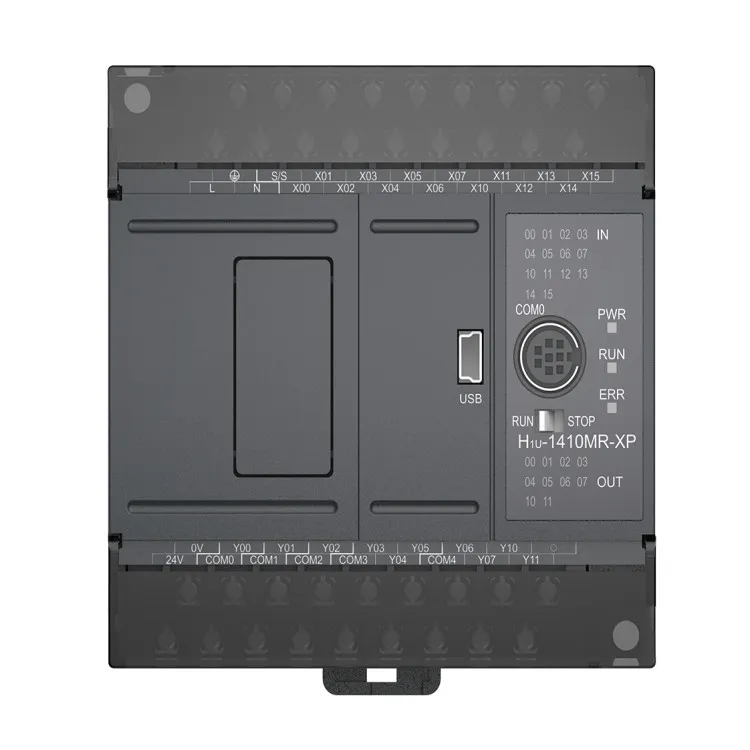
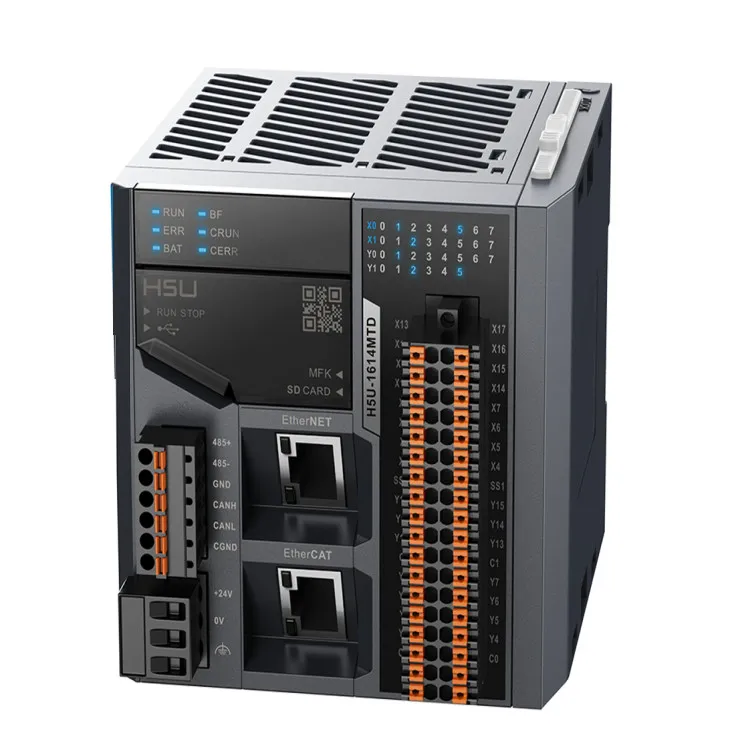
If you're in the market for a CAN Bus PLC or have any questions about how to set up your network, don't hesitate to reach out. We're here to help you get the most out of your CAN Bus system. Whether you're working on a small - scale project or a large industrial application, our CAN Bus PLCs can provide the reliable and efficient communication you need.
References
- "CAN Bus Basics" by some CAN Bus experts.
- "PLC Programming and Network Communication" textbooks.
- Industry whitepapers on CAN Bus technology and its applications.