
AC servo motors are widely used in various industrial applications due to their high precision, efficiency, and reliability. One of the key specifications of an AC servo motor is its rated voltage. In this blog post, as an AC servo motor supplier, I will delve into what the rated voltage of AC servo motors is, why it matters, and how it impacts the performance and selection of these motors.
Understanding the Concept of Rated Voltage
The rated voltage of an AC servo motor refers to the voltage at which the motor is designed to operate optimally. It is a crucial parameter specified by the manufacturer and is usually marked on the motor's nameplate. This voltage value indicates the electrical potential difference that should be applied across the motor terminals to ensure that the motor can deliver its rated power, speed, and torque.
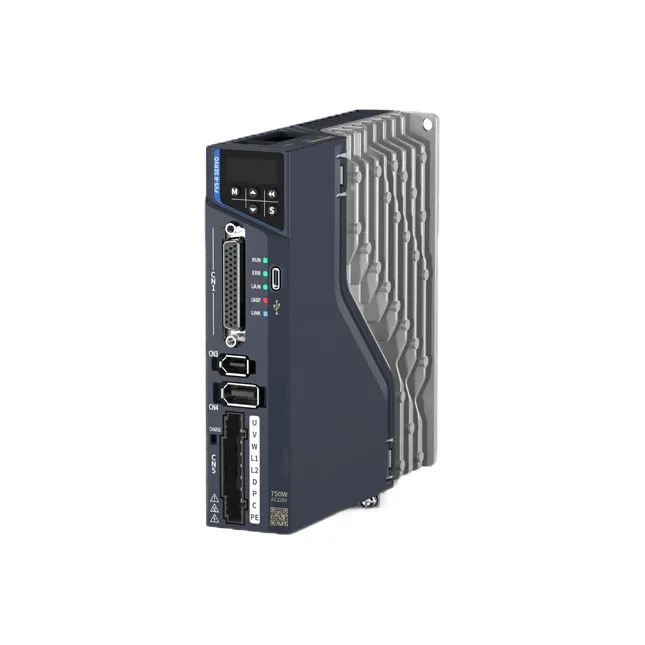
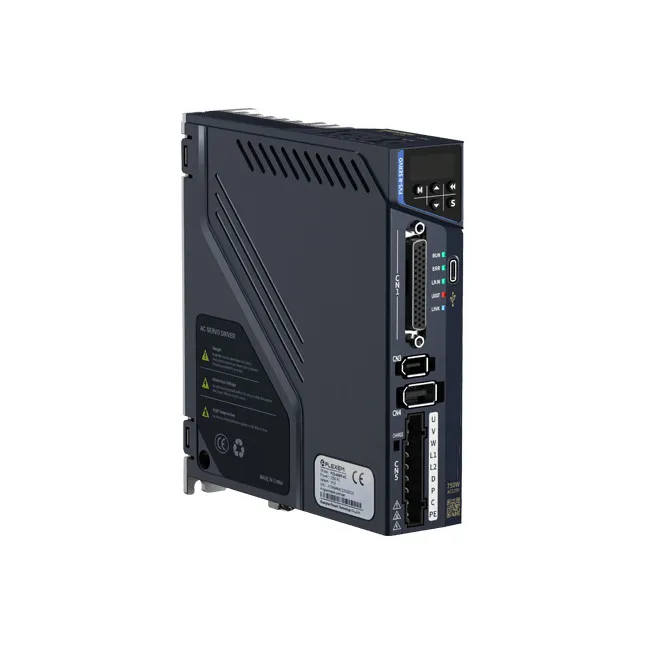
For example, common rated voltages for AC servo motors include 110V, 220V, 380V, and 480V. These values are standardized to match the available power supply systems in different regions and applications. A motor designed for a specific rated voltage will have its internal electrical components, such as windings and insulation materials, engineered to withstand and operate efficiently at that particular voltage level.
Why Rated Voltage Matters
1. Performance and Efficiency
Operating an AC servo motor at its rated voltage is essential for achieving optimal performance and efficiency. When the applied voltage is equal to the rated voltage, the motor can generate the intended magnetic field, which in turn produces the desired torque and speed. If the voltage is too low, the motor may not be able to reach its rated speed or torque, leading to reduced performance and increased operating time for tasks. On the other hand, if the voltage is too high, it can cause overheating, excessive current draw, and potentially damage the motor's insulation and other components.
2. Safety
Using the correct rated voltage is also a matter of safety. Motors are designed with insulation materials that can withstand a certain level of electrical stress. Applying a voltage higher than the rated voltage can exceed the insulation's breakdown voltage, leading to electrical arcing, short - circuits, and even fire hazards. Additionally, over - voltage can cause mechanical stress on the motor's moving parts due to excessive torque, which may result in premature wear and failure.
3. Compatibility with Power Supply
The rated voltage of an AC servo motor must be compatible with the available power supply in the application environment. Different regions have different standard power supply voltages. For instance, in North America, the common household and industrial power supply voltages are 120V and 240V single - phase, and 208V, 240V, or 480V three - phase. In Europe, the standard voltages are 230V single - phase and 400V three - phase. When selecting an AC servo motor, it is crucial to choose one with a rated voltage that matches the local power supply to avoid the need for complex and costly voltage conversion equipment.
Factors Affecting the Selection of Rated Voltage
1. Application Requirements
The specific requirements of the application play a significant role in determining the appropriate rated voltage for an AC servo motor. For small - scale applications with low power requirements, such as laboratory equipment or small automated machines, a lower rated voltage like 110V or 220V may be sufficient. These lower voltages are often easier to obtain and can be safer to work with in some environments.
On the other hand, for large - scale industrial applications, such as heavy - duty manufacturing equipment or high - speed conveyor systems, higher rated voltages like 380V or 480V are typically preferred. Higher voltages can deliver more power with less current, reducing the size of the conductors and minimizing power losses in the electrical system.
2. Motor Size and Power Rating
Generally, larger AC servo motors with higher power ratings require higher rated voltages. This is because the power (P) in an electrical circuit is given by the formula P = VI (where V is voltage and I is current). For a given power output, increasing the voltage allows for a decrease in current. Since the size of the conductors and the heat generated in the motor are related to the current, using a higher voltage can reduce the physical size of the motor and improve its efficiency.
For example, a 1.5Kw Servo Motor may be available in different rated voltages, but a higher - voltage version may be more suitable for applications where space is limited or where power efficiency is a priority.
3. System Design and Compatibility
The overall design of the electrical system in which the AC servo motor will be used also affects the choice of rated voltage. If the system already has a specific voltage level available from a power distribution network or a power supply unit, it is usually more practical to select a motor with a compatible rated voltage. This simplifies the system design and reduces the need for additional voltage - conversion components.
Different Types of AC Servo Motors and Their Typical Rated Voltages
1. Single - Phase AC Servo Motors
Single - phase AC servo motors are commonly used in small - scale applications where the power requirements are relatively low. They are often found in household appliances, small machine tools, and some light - duty automation equipment. The typical rated voltages for single - phase AC servo motors are 110V or 220V, which are readily available from standard household or commercial power supplies.
2. Three - Phase AC Servo Motors
Three - phase AC servo motors are widely used in industrial applications due to their higher power density and better efficiency compared to single - phase motors. They are commonly used in heavy - duty machinery, robotics, and large - scale manufacturing systems. The typical rated voltages for three - phase AC servo motors are 208V, 220V, 380V, and 480V, depending on the region and the specific application requirements. For example, a 3 Phase AC Servo Motor used in a European industrial setting may have a rated voltage of 400V, while one used in a North American factory may be rated for 480V.
3. Low - Power AC Servo Motors
Low - power AC servo motors, such as 750w Servo Motor, are often used in applications where space is limited and power consumption needs to be minimized. These motors can be available in both single - phase and three - phase configurations, with rated voltages ranging from 110V to 380V, depending on the application and the power supply availability.
Conclusion
In conclusion, the rated voltage of an AC servo motor is a critical specification that has a significant impact on its performance, safety, and compatibility with the power supply. As an AC servo motor supplier, we understand the importance of selecting the right rated voltage for your specific application. Whether you need a small - power single - phase motor or a high - power three - phase motor, we can provide you with a wide range of options to meet your requirements.
If you are in the process of selecting an AC servo motor for your project or need more information about rated voltages and other motor specifications, please feel free to contact us. Our team of experts is ready to assist you in making the best choice for your application and ensuring a smooth and efficient operation of your equipment.
References
- "Electric Machinery Fundamentals" by Stephen J. Chapman
- "AC Servo Systems: Analysis, Modeling, and Control" by F. Blaabjerg, R. Teodorescu, M. Liserre, and A. V. Timbus