
In the era of rapid technological advancement, the concept of smart factories has emerged as a revolutionary approach to manufacturing. Smart factories leverage cutting - edge technologies to optimize production processes, enhance efficiency, and improve overall quality. Among the many technologies that play a crucial role in this transformation, IO - Link stands out as a game - changer. As an IO - Link supplier, I am excited to delve into the role of IO - Link in smart factories and explore how it is reshaping the manufacturing landscape.
Understanding IO - Link
IO - Link is a standardized communication protocol (IEC 61131 - 9) that enables seamless communication between sensors, actuators, and control systems. It provides a point - to - point connection, allowing for bidirectional data transfer. This means that not only can the control system send commands to the sensors and actuators, but the sensors can also send valuable diagnostic and process data back to the control system.
One of the key advantages of IO - Link is its simplicity. It can be easily integrated into existing industrial networks without the need for major overhauls. The protocol uses a standard three - wire connection, which makes it cost - effective and easy to install. This simplicity is a significant factor in its widespread adoption in smart factories.
Role of IO - Link in Smart Factories
1. Enhanced Sensor and Actuator Functionality
In smart factories, sensors and actuators are the eyes and hands of the production process. IO - Link takes the functionality of these devices to a whole new level. With IO - Link, sensors can provide more detailed information about the process. For example, a temperature sensor can not only measure the temperature but also provide information about the accuracy of the measurement, the status of the sensor itself, and even predict when it might need maintenance.
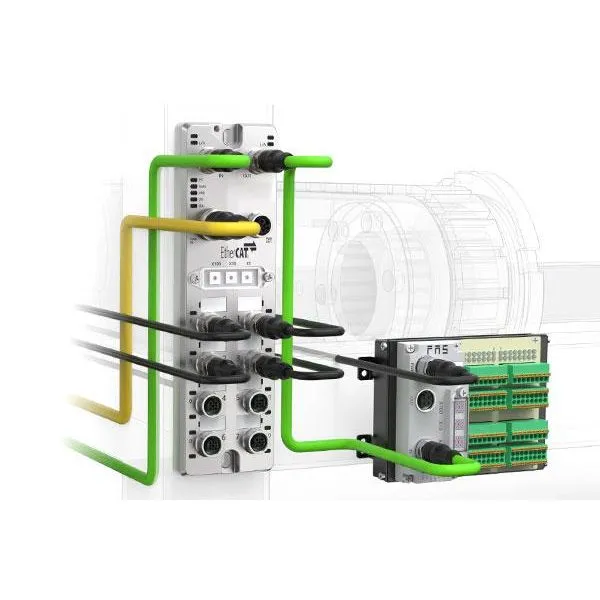
Actuators, on the other hand, can receive more precise commands. This allows for more accurate control of processes such as valve opening and closing, motor speed adjustment, etc. For instance, IO - Link Device Module can be used to connect various sensors and actuators to the IO - Link network, enabling seamless communication and enhanced functionality.
2. Improved Process Monitoring and Control
IO - Link enables real - time monitoring of production processes. The control system can continuously receive data from sensors installed throughout the factory. This data can be used to detect anomalies, predict potential issues, and make adjustments to the production process in real - time.
For example, if a pressure sensor in a hydraulic system detects a sudden drop in pressure, the control system can immediately shut down the system to prevent damage. This level of real - time monitoring and control helps to improve the overall efficiency and reliability of the production process.
3. Simplified Device Management
Managing a large number of sensors and actuators in a smart factory can be a daunting task. IO - Link simplifies this process by providing a standardized way to configure, parameterize, and diagnose devices. All device settings can be stored in the control system and easily transferred to new devices during replacement.
This reduces the time and effort required for device setup and maintenance. For example, when a faulty sensor needs to be replaced, a new sensor can be quickly configured with the same settings as the old one, minimizing downtime.
4. Integration with Higher - Level Systems
IO - Link can be easily integrated with higher - level industrial networks such as Ethernet/IP, Profinet, and Modbus TCP. This allows for seamless data transfer between the shop - floor devices and the enterprise - level systems. The data collected from sensors and actuators can be used for production planning, quality control, and supply chain management.
For instance, Multi - protocol Network Module enables IO - Link devices to communicate with different industrial networks, facilitating the integration of smart factory components with the overall enterprise infrastructure.
5. Cost Savings
By improving process efficiency, reducing downtime, and simplifying device management, IO - Link helps to achieve significant cost savings in smart factories. The ability to predict maintenance needs and prevent equipment failures reduces the cost of unplanned downtime. Additionally, the simplified installation and configuration of devices lower the initial investment and ongoing maintenance costs.
Applications of IO - Link in Different Industries
1. Automotive Industry
In the automotive industry, IO - Link is widely used for quality control and process monitoring. Sensors connected via IO - Link can detect defects in parts, monitor the torque of bolts, and ensure the proper alignment of components during assembly. This helps to improve the quality of the final product and reduce the number of recalls.
2. Food and Beverage Industry
In the food and beverage industry, IO - Link is used for hygiene monitoring and process control. Sensors can measure parameters such as temperature, pressure, and fill levels in real - time. Actuators can control the flow of ingredients and the operation of packaging machines. IO - Link also enables the easy replacement of sensors and actuators in a hygienic manner, ensuring compliance with strict industry standards.
3. Packaging Industry
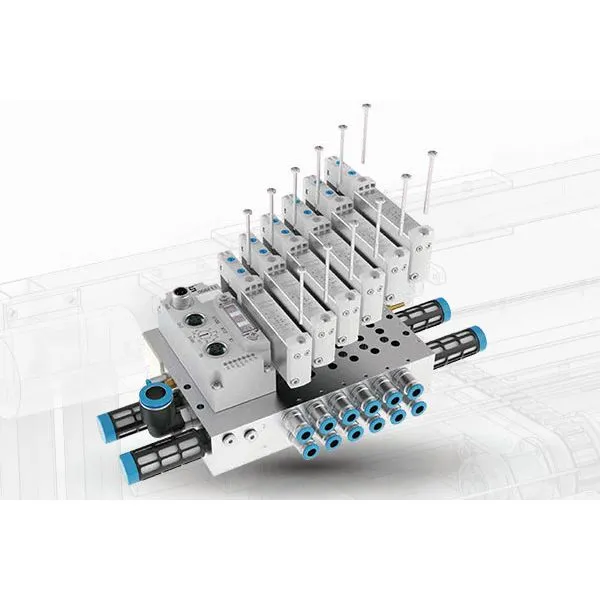
In the packaging industry, IO - Link plays a crucial role in optimizing the packaging process. Sensors can detect the presence and position of products, while actuators can control the movement of packaging materials. This results in higher packaging speeds, fewer errors, and improved overall efficiency. For example, Valve Islands can be controlled via IO - Link to precisely manage the flow of air and other fluids in packaging machines.
Future Trends of IO - Link in Smart Factories
The role of IO - Link in smart factories is expected to grow in the coming years. With the increasing adoption of the Internet of Things (IoT) and Industry 4.0, IO - Link will become an even more important part of the industrial ecosystem.
One of the future trends is the integration of IO - Link with artificial intelligence (AI) and machine learning (ML) technologies. AI and ML algorithms can analyze the large amount of data collected by IO - Link devices to identify patterns, make predictions, and optimize production processes further.
Another trend is the development of more advanced IO - Link devices with enhanced functionality. These devices will be able to provide even more detailed information and perform more complex tasks, further improving the efficiency and intelligence of smart factories.
Conclusion
As an IO - Link supplier, I have witnessed firsthand the transformative power of IO - Link in smart factories. Its ability to enhance sensor and actuator functionality, improve process monitoring and control, simplify device management, integrate with higher - level systems, and achieve cost savings makes it an indispensable technology in the era of smart manufacturing.
Whether you are in the automotive, food and beverage, packaging, or any other industry, IO - Link can help you take your production processes to the next level. If you are interested in exploring how IO - Link can benefit your smart factory, I encourage you to reach out to us for a detailed discussion. We are here to help you find the best IO - Link solutions for your specific needs and guide you through the implementation process. Let's work together to build a more efficient and intelligent manufacturing future.
References
- IEC 61131 - 9: Industrial - process measurement, control, and automation - Programming languages for programmable controllers - Part 9: IO - Link communication profile
- Various industry reports on smart manufacturing and the adoption of IO - Link technology.