
In the realm of industrial automation, Human - Machine Interfaces (HMIs) play a pivotal role in enabling operators to interact with industrial systems effectively. As an industrial HMI supplier, I often encounter questions regarding the storage capacity of these devices. In this blog post, I will delve into the various aspects of the storage capacity of industrial HMIs, exploring what it means, the factors influencing it, and the typical ranges available in the market.
Understanding Storage Capacity in Industrial HMIs
Storage capacity in an industrial HMI refers to the amount of data that the device can hold. This data can be of various types, including configuration files, historical process data, alarm logs, and user - created programs. Configuration files are essential as they define how the HMI will interact with the connected industrial equipment. Historical process data provides valuable insights into the performance of the industrial process over time, which can be used for analysis, optimization, and troubleshooting. Alarm logs record any abnormal events that occur in the system, allowing operators to quickly identify and address issues. User - created programs, on the other hand, can automate certain tasks or customize the HMI's functionality according to specific industrial requirements.
Factors Influencing Storage Capacity Requirements
Several factors influence the storage capacity requirements of an industrial HMI. One of the primary factors is the complexity of the industrial process. In a simple manufacturing process where there are only a few sensors and actuators, the amount of data generated and the need for storage may be relatively low. However, in a large - scale chemical plant or a power generation facility, where there are hundreds or even thousands of sensors continuously collecting data, the storage requirements can be significantly higher.
The frequency of data collection also plays a crucial role. If data is collected at a high frequency, such as every few milliseconds, the amount of data generated will be much larger compared to a system where data is collected at a lower frequency, say every few minutes. Additionally, the retention period of the data is important. Some industries may require data to be stored for a short period, such as a few days or weeks, while others, especially those in regulated industries like pharmaceuticals or food production, may need to store data for months or even years for compliance purposes.
Another factor is the use of multimedia elements. Some modern industrial HMIs support the display of videos, images, and high - resolution graphics. These multimedia elements require additional storage space compared to text - based data. For example, if an HMI is used to display real - time video feeds from surveillance cameras in an industrial facility, the storage capacity needed will be much higher.
Typical Storage Capacity Ranges
The storage capacity of industrial HMIs can vary widely depending on the type and model of the device. Entry - level industrial HMIs may have a storage capacity ranging from a few megabytes (MB) to a few gigabytes (GB). These HMIs are typically suitable for small - scale applications with relatively simple processes and low data collection requirements.
Mid - range industrial HMIs usually offer storage capacities in the range of several gigabytes to tens of gigabytes. These devices can handle more complex processes and a higher volume of data. They are often used in medium - sized manufacturing plants or industrial systems with moderate data collection frequencies.
High - end industrial HMIs, on the other hand, can have storage capacities of hundreds of gigabytes or even terabytes. These HMIs are designed for large - scale industrial applications where there is a massive amount of data to be stored and processed. They are commonly used in industries such as oil and gas, automotive manufacturing, and aerospace.
Different Types of Storage in Industrial HMIs
Industrial HMIs can use different types of storage media. One of the most common types is flash memory. Flash memory is non - volatile, which means it retains data even when the power is turned off. It is also relatively inexpensive and has a fast read and write speed, making it suitable for storing configuration files and frequently accessed data.
Hard disk drives (HDDs) are another option, especially for HMIs that require large storage capacities. HDDs can offer higher storage densities at a lower cost per gigabyte compared to flash memory. However, they are more susceptible to mechanical failures due to their moving parts and may have slower read and write speeds in some cases.
Solid - State Drives (SSDs) are becoming increasingly popular in industrial HMIs. SSDs combine the advantages of flash memory and HDDs. They have a high read and write speed, are non - volatile, and are more reliable than HDDs as they have no moving parts. Although they are more expensive per gigabyte compared to HDDs, the cost is gradually decreasing, making them a viable option for many industrial applications.
Impact of Storage Capacity on HMI Performance
The storage capacity of an industrial HMI can have an impact on its performance. If an HMI runs out of storage space, it may start to experience performance issues. For example, the HMI may become slow to respond when accessing data or may even crash if it cannot store new data. In some cases, the system may start overwriting old data to make space for new data, which can lead to the loss of important historical information.
Therefore, it is important to choose an industrial HMI with an appropriate storage capacity based on the specific requirements of the industrial application. It is also advisable to monitor the storage usage regularly and plan for future expansion if necessary.
Our Product Offerings
As an industrial HMI supplier, we offer a wide range of HMIs with different storage capacities to meet the diverse needs of our customers. Our Internet Of Things Touch Screen is designed for applications that require seamless integration with the Internet of Things. It comes with a sufficient storage capacity to handle the data generated by IoT devices and can be easily configured to meet specific data storage requirements.
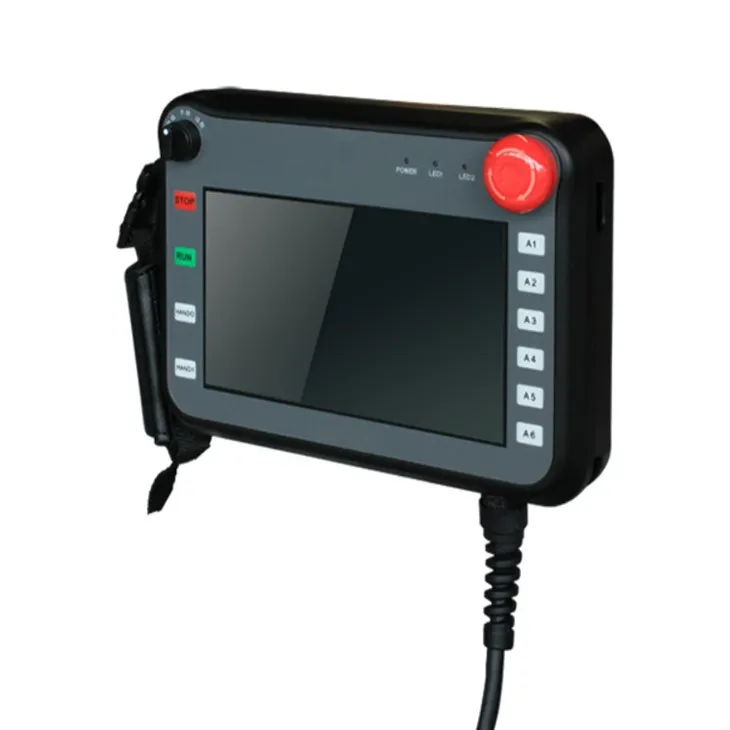
Our Handheld HMI is a portable solution that offers a balance between storage capacity and portability. It is suitable for on - the - go operators who need to access and store data in different locations within an industrial facility.
For outdoor applications, our Outdoor Touch Screen is built to withstand harsh environmental conditions. It has a robust storage system that can handle the data generated in outdoor industrial settings, such as construction sites or mining operations.
Contact Us for Procurement
If you are in the market for an industrial HMI and are unsure about the storage capacity requirements for your specific application, our team of experts is here to help. We can provide you with detailed information about our products, assist you in choosing the right HMI with the appropriate storage capacity, and offer technical support throughout the procurement process. Whether you are a small - scale manufacturer or a large - scale industrial enterprise, we have the solutions to meet your needs. Reach out to us, and let's start a conversation about how our industrial HMIs can enhance your industrial automation system.
References
- "Industrial Automation Handbook" by Peter Welter
- "Human - Machine Interface Design for Industrial Applications" by John Smith
- Industry reports on industrial HMI technology trends and market analysis