
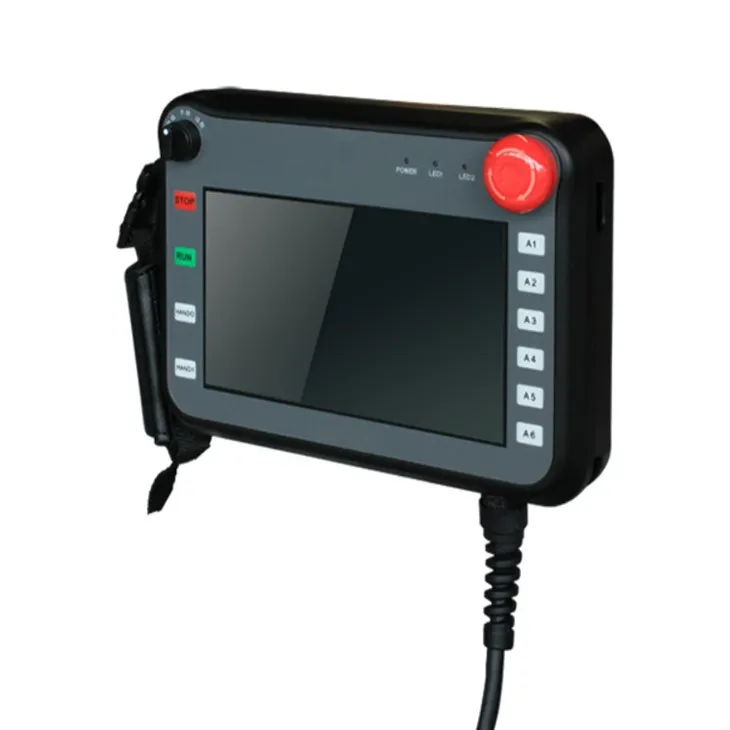
In today's fast - paced industrial world, predictive maintenance programs have become a game - changer. They help businesses save costs, reduce downtime, and increase the overall efficiency of their operations. And guess what? Handheld HMIs (Human - Machine Interfaces) can play a crucial role in supporting these programs. As a Handheld HMI supplier, I've seen firsthand how these devices can transform the way maintenance is carried out.
Let's start by understanding what predictive maintenance is all about. Predictive maintenance uses data analysis tools and techniques to detect anomalies in equipment performance. By monitoring various parameters like temperature, vibration, and pressure, it can predict when a machine is likely to fail. This allows maintenance teams to take proactive measures before a breakdown occurs, which is a whole lot better than dealing with costly unplanned downtime.
So, how exactly can Handheld HMIs support these predictive maintenance programs?
Real - time Data Access
One of the key features of Handheld HMIs is their ability to provide real - time data access. When maintenance technicians are out in the field, they need to have instant access to information about the equipment they're working on. With a Handheld HMI, they can connect to the industrial network and retrieve data from sensors installed on the machines. For example, they can check the current temperature of a motor or the pressure in a pipeline right on the device's screen. This real - time data is essential for making accurate predictions about equipment health. If the temperature of a machine is rising steadily, it could be a sign of an impending problem. The technician can then use the Handheld HMI to dig deeper into the data, look at historical trends, and decide whether immediate action is required.
The Handheld HMI acts as a portable control center. Technicians can carry it around the factory floor, accessing data from different machines as they move. It's like having a mini - computer in their hands that gives them all the information they need to make informed decisions. You can learn more about Handheld HMIs here.
On - the - spot Diagnostics
Another great advantage of Handheld HMIs in predictive maintenance is their ability to perform on - the - spot diagnostics. These devices are equipped with powerful software that can analyze the data collected from the sensors. For instance, if a vibration sensor detects abnormal vibrations in a rotating machine, the Handheld HMI can run diagnostic algorithms to determine the root cause of the problem. It can tell whether the issue is due to misalignment, a worn - out bearing, or some other factor.
This on - the - spot diagnostic capability saves a lot of time. Instead of having to take the data back to the office, analyze it on a desktop computer, and then come up with a solution, technicians can do it all right there at the machine. They can quickly identify the problem, make a repair plan, and get to work. This not only reduces downtime but also improves the overall productivity of the maintenance team.
Remote Monitoring and Control
Handheld HMIs also support remote monitoring and control. In some industrial settings, machines are located in hard - to - reach areas or in hazardous environments. With a Handheld HMI, technicians can monitor these machines from a safe distance. They can view the status of the equipment, adjust settings, and even start or stop the machines if necessary.
For example, in a chemical plant, there might be some processes that are too dangerous for technicians to approach directly. Using a Handheld HMI, they can monitor the pressure, temperature, and flow rates of the chemicals from a control room or a safe location outside the hazardous area. If there's an issue, they can take corrective action immediately without putting themselves at risk.
In addition, remote monitoring allows for better coordination between different teams. Maintenance managers can access the data collected by the Handheld HMIs from their offices and keep track of the overall status of the equipment. They can assign tasks to technicians based on the data and ensure that the predictive maintenance program is running smoothly.
Data Logging and Reporting
Data logging is an important part of predictive maintenance. Handheld HMIs can store large amounts of data collected from the sensors over a period of time. This data can be used for further analysis and to generate reports. Technicians can use these reports to track the performance of the equipment over time, identify patterns, and make long - term maintenance plans.
For example, if a particular machine has been experiencing occasional overheating problems, the data logged by the Handheld HMI can show when these problems occurred, what the operating conditions were at the time, and how the machine responded. This information can be used to develop a more effective maintenance strategy, such as changing the lubrication schedule or replacing a faulty component.
The Handheld HMI can also generate automated reports. These reports can be customized to include specific information that is relevant to the maintenance team or the management. They can be sent via email or shared on a company network, making it easy for everyone to stay informed about the equipment's health.
Compatibility with Different Systems
As an industrial environment usually has a mix of different types of equipment and systems, compatibility is a major concern. Handheld HMIs are designed to be compatible with a wide range of industrial protocols and communication standards. They can connect to different types of sensors, PLCs (Programmable Logic Controllers), and other industrial devices.
Whether it's a legacy system or a modern, state - of - the - art machine, the Handheld HMI can communicate with it and retrieve the necessary data. This means that businesses don't have to worry about replacing all their existing equipment to implement a predictive maintenance program. They can simply use the Handheld HMI to integrate their current systems and start reaping the benefits of predictive maintenance.
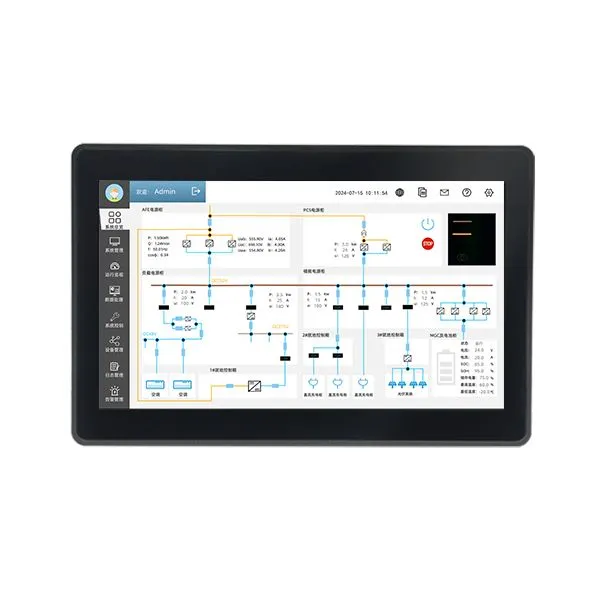
Some Handheld HMIs also support the use of different types of displays and touchscreens. This allows technicians to choose the most suitable interface for their needs, whether they're working in bright sunlight or in a dimly lit area. You can find out more about other types of HMIs, like Wide Temperature HMIs and Embedded HMIs, which might also be useful in your predictive maintenance setup.
Training and User - friendliness
One of the great things about Handheld HMIs is that they are relatively easy to use. Most of these devices come with intuitive interfaces that are similar to the smartphones and tablets that people are used to. This means that technicians don't need extensive training to start using them.
The user - friendly design of Handheld HMIs also encourages more technicians to get involved in the predictive maintenance program. They can quickly learn how to access data, run diagnostics, and generate reports. This increases the overall efficiency of the maintenance team and ensures that the predictive maintenance program is implemented effectively.
Cost - effectiveness
When it comes to implementing a predictive maintenance program, cost is always a factor. Handheld HMIs are a cost - effective solution. They are relatively inexpensive compared to some of the large - scale monitoring systems. And since they can be used by multiple technicians, the cost per user is even lower.
In addition, by reducing downtime and preventing costly breakdowns, Handheld HMIs can actually save businesses a lot of money in the long run. The investment in these devices is quickly offset by the savings in maintenance costs and increased productivity.
If you're considering implementing a predictive maintenance program or looking to enhance your existing one, Handheld HMIs are definitely worth considering. As a Handheld HMI supplier, I can offer you a range of high - quality devices that are designed to meet your specific needs. Whether you're a small - scale manufacturer or a large industrial enterprise, our Handheld HMIs can help you take your predictive maintenance program to the next level.
If you're interested in learning more about how our Handheld HMIs can support your predictive maintenance programs, or if you want to discuss a potential purchase, don't hesitate to reach out. We're here to help you make the most of this technology and improve the efficiency of your operations.
References
- "Predictive Maintenance: Concepts, Methods, and Applications" by M. Wang
- "Industrial Human - Machine Interfaces: Design and Application" by A. Smith