
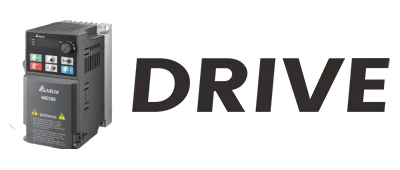
As a supplier of DC servo drivers, I understand the critical role these devices play in a wide range of industrial applications. The dynamic performance of a DC servo driver is crucial for achieving precise control, high-speed operation, and efficient energy use. In this blog post, I will share some insights on how to optimize the dynamic performance of a DC servo driver.
Understanding the Basics of DC Servo Drivers
Before diving into optimization strategies, it's essential to have a solid understanding of what a DC servo driver is and how it works. A DC servo driver is an electronic device that controls the speed, torque, and position of a DC servo motor. It receives control signals from a controller, such as a PLC or a motion controller, and converts them into appropriate electrical signals to drive the motor.
The dynamic performance of a DC servo driver refers to its ability to respond quickly and accurately to changes in the control signals. This includes parameters such as acceleration, deceleration, settling time, and tracking error. A well-optimized DC servo driver can significantly improve the overall performance of a motion control system.
Selecting the Right Motor
The first step in optimizing the dynamic performance of a DC servo driver is to select the right motor. The motor should be compatible with the driver in terms of voltage, current, and power ratings. Additionally, the motor's torque-speed characteristics should match the requirements of the application.
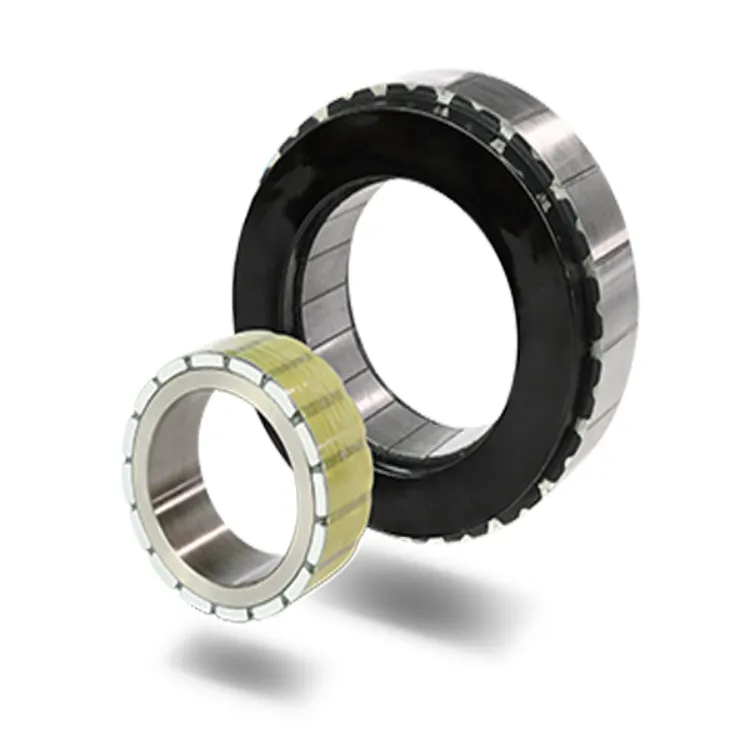
For applications that require high torque at low speeds, a Frameless Torque Motor might be a good choice. These motors offer high torque density and can provide smooth operation even at very low speeds. On the other hand, for applications that require high-speed operation, a motor with a high maximum speed rating should be selected.
Proper Tuning of the Driver
Once the motor is selected, the next step is to properly tune the DC servo driver. Tuning involves adjusting the driver's parameters to optimize its performance. Some of the key parameters that need to be tuned include the proportional (P), integral (I), and derivative (D) gains of the PID controller.
The P gain determines the responsiveness of the driver to the error between the desired and actual values. A higher P gain can result in faster response times but may also lead to overshoot and instability. The I gain is used to eliminate steady-state errors, while the D gain helps to dampen oscillations and improve stability.
Tuning the PID gains requires a systematic approach. One common method is the Ziegler-Nichols method, which involves finding the critical gain and period of the system and then using these values to calculate the optimal PID gains. However, this method may not be suitable for all applications, and in some cases, manual tuning or the use of advanced tuning algorithms may be required.
Improving the Feedback System
The feedback system is an essential part of a DC servo driver. It provides information about the motor's position, speed, and torque, which is used by the driver to adjust its output. A high-quality feedback system can significantly improve the dynamic performance of the driver.
There are several types of feedback devices available, including encoders, resolvers, and Hall effect sensors. Encoders are the most commonly used feedback devices in DC servo systems due to their high accuracy and resolution. They can provide both absolute and incremental position information, which is useful for precise control.
To improve the performance of the feedback system, it's important to ensure that the feedback device is properly installed and calibrated. Additionally, the wiring between the feedback device and the driver should be shielded to minimize electromagnetic interference.
Reducing Electrical Noise
Electrical noise can have a significant impact on the dynamic performance of a DC servo driver. It can cause errors in the feedback signals, leading to inaccurate control and reduced performance. Therefore, it's important to take steps to reduce electrical noise in the system.
One way to reduce electrical noise is to use proper grounding techniques. The driver, motor, and other components in the system should be grounded to a common ground point to minimize ground loops. Additionally, the power supply should be filtered to remove any high-frequency noise.
Another effective method is to use shielded cables for the power and control signals. Shielded cables can help to prevent electromagnetic interference from entering or leaving the cables, reducing the risk of noise-induced errors.
Thermal Management
Thermal management is another important aspect of optimizing the dynamic performance of a DC servo driver. Excessive heat can cause the driver's components to degrade, leading to reduced performance and reliability. Therefore, it's important to ensure that the driver is properly cooled.
Most DC servo drivers are equipped with built-in cooling mechanisms, such as heat sinks and fans. These cooling mechanisms help to dissipate the heat generated by the driver's power components. However, in some cases, additional cooling may be required, especially in high-power applications or environments with high ambient temperatures.
Using Advanced Control Algorithms
In addition to the basic PID control algorithm, there are several advanced control algorithms that can be used to optimize the dynamic performance of a DC servo driver. These algorithms can provide better control performance, especially in complex applications.
One such algorithm is the model predictive control (MPC) algorithm. MPC uses a mathematical model of the system to predict its future behavior and then calculates the optimal control inputs to achieve the desired performance. This algorithm can take into account constraints such as maximum torque and speed limits, making it suitable for applications with strict performance requirements.
Another advanced control algorithm is the sliding mode control (SMC) algorithm. SMC is a robust control algorithm that can provide good performance even in the presence of uncertainties and disturbances. It works by forcing the system's state to slide along a predefined sliding surface, which helps to reduce the effects of external disturbances.
Conclusion
Optimizing the dynamic performance of a DC servo driver requires a comprehensive approach that involves selecting the right motor, proper tuning of the driver, improving the feedback system, reducing electrical noise, thermal management, and using advanced control algorithms. By following these strategies, you can significantly improve the performance of your DC servo system, leading to higher productivity, better quality, and reduced costs.
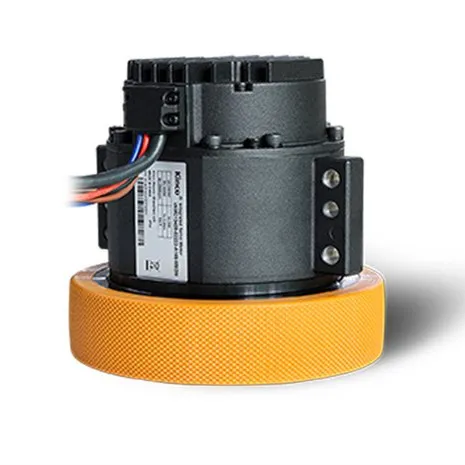
If you are interested in learning more about our Mini DC Servo Driver or Integrated Servo Wheel products, or if you have any questions about optimizing the dynamic performance of your DC servo system, please feel free to contact us for a procurement discussion. We are committed to providing high-quality products and excellent technical support to meet your needs.
References
- Dorf, R. C., & Bishop, R. H. (2017). Modern Control Systems. Pearson.
- Franklin, G. F., Powell, J. D., & Emami-Naeini, A. (2015). Feedback Control of Dynamic Systems. Pearson.
- Kraus, J. D., & Carver, K. R. (2012). Electromagnetics. McGraw-Hill Education.