
Hey there! As a supplier of HMI (Human-Machine Interface) sizes, I often get asked about what HMI sizes are used in aerospace ground support equipment. It's a super interesting topic, and I'm stoked to share my insights with you.
First off, let's understand what aerospace ground support equipment is. This includes all the stuff on the ground that helps with the operation, maintenance, and servicing of aircraft. Think fueling trucks, baggage loaders, aircraft tugs, and all those other machines that keep airports running smoothly. The HMI in these pieces of equipment is crucial as it allows operators to interact with the machinery, monitor its status, and make adjustments as needed.
Now, when it comes to choosing the right HMI size for aerospace ground support equipment, there are a few factors to consider. One of the most important ones is the available space on the equipment. You can't just slap a huge HMI on a small control panel; it has to fit properly. Another factor is the complexity of the operations. If the equipment has a lot of functions and requires detailed monitoring, a larger HMI might be necessary. And of course, the environment in which the equipment operates also plays a role. Aerospace ground support equipment is often used in busy airport environments, so the HMI needs to be visible and easy to use even in bright sunlight or noisy conditions.
Let's take a look at some of the common HMI sizes used in aerospace ground support equipment and their applications.
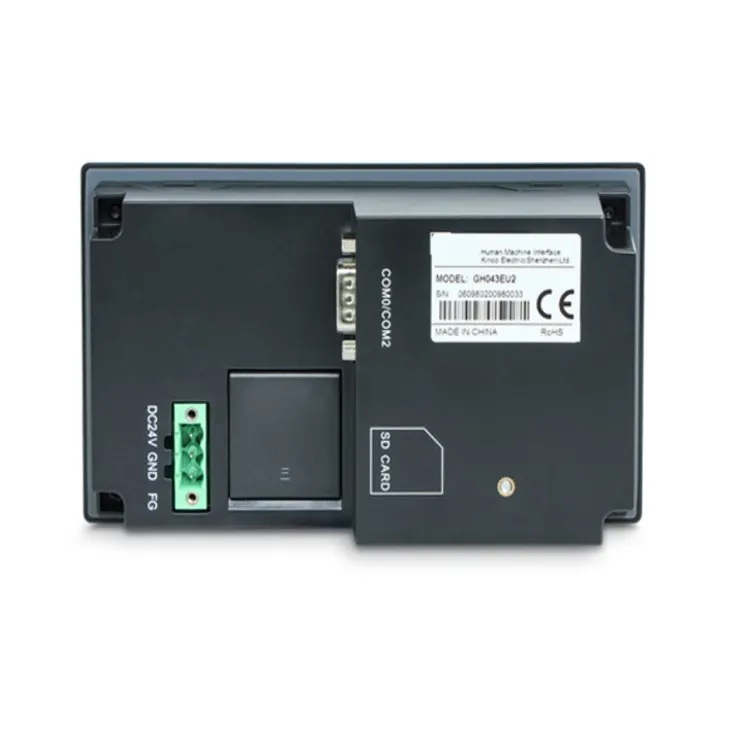
4.3 Inch HMI
The 4.3 Inch HMI is a popular choice for smaller aerospace ground support equipment or for applications where space is limited. It's compact and can be easily integrated into tight control panels. Despite its small size, it can still provide a decent amount of information. For example, on a small aircraft tug, a 4.3-inch HMI can display basic information like speed, battery status, and steering angle. It's also relatively inexpensive, which makes it a cost-effective option for equipment manufacturers.
10.1 Inch HMI
The 10.1 Inch HMI is a great middle-ground option. It offers a larger display area than the 4.3-inch HMI, which means it can show more detailed information. This size is often used in equipment that requires a bit more interaction and monitoring. For instance, on a fueling truck, a 10.1-inch HMI can display fuel levels, flow rates, and other important parameters. It's also large enough to have a user-friendly interface with bigger buttons and icons, making it easier for operators to use, especially when wearing gloves.
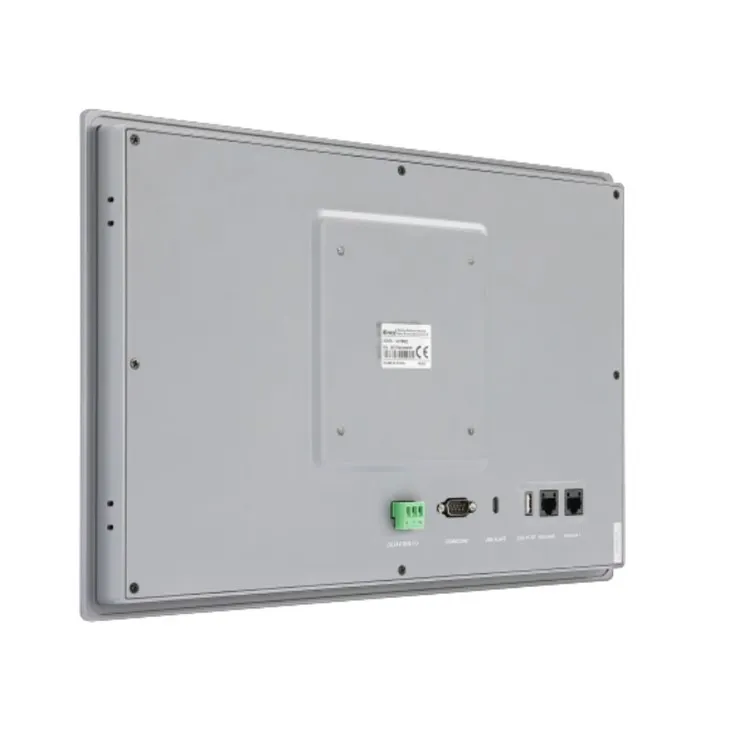
15.6 Inch HMI
The 15.6 Inch HMI is the big daddy of HMI sizes. It's typically used in more complex aerospace ground support equipment or in situations where a large amount of information needs to be displayed at once. For example, on a large baggage loader, a 15.6-inch HMI can show multiple camera feeds, load capacity, and other detailed operational data. The large display makes it easy for operators to see everything clearly, even from a distance. However, it does take up more space and is usually more expensive than the smaller sizes.
In addition to these common sizes, there are also other HMI sizes available, and sometimes custom sizes can be made to fit specific requirements. For example, if an equipment manufacturer has a unique control panel design or needs a specific aspect ratio for the HMI, we can work with them to create a custom solution.
Another important aspect to consider is the features of the HMI. In the aerospace ground support equipment industry, HMIs need to be rugged and reliable. They should be able to withstand harsh environmental conditions such as temperature variations, vibrations, and dust. Many of our HMIs come with features like high-brightness displays for outdoor use, anti-glare coatings, and shock and vibration resistance.
When it comes to the software on the HMI, it needs to be intuitive and easy to use. Operators are often under pressure to perform their tasks quickly and efficiently, so a complicated interface can lead to mistakes. We work closely with software developers to ensure that our HMIs have user-friendly interfaces that can be easily customized to meet the specific needs of each piece of equipment.
So, if you're in the aerospace ground support equipment industry and you're looking for the right HMI size for your equipment, we're here to help. We have a wide range of HMI sizes and configurations to choose from, and we can provide you with expert advice on which size and features are best suited for your application. Whether you need a small, compact HMI for a simple piece of equipment or a large, high-tech HMI for a complex machine, we've got you covered.
If you're interested in learning more about our HMI products or want to discuss your specific requirements, don't hesitate to reach out. We're always happy to have a chat and see how we can help you improve the performance and usability of your aerospace ground support equipment. Let's work together to find the perfect HMI solution for your needs!
References
- Industry reports on aerospace ground support equipment technology
- Technical specifications of HMI products from leading manufacturers