
A stepper system is a crucial component in many industrial and automation applications, offering precise control over motion. At the heart of a high - performing stepper system lies the encoder. In this blog, as a trusted stepper system supplier, I'll delve into what an encoder is in a stepper system, its functions, types, and why it matters.
What is an Encoder in a Stepper System?
An encoder in a stepper system is a device that provides feedback about the position, speed, and direction of the stepper motor's shaft. It acts as the eyes of the system, enabling more accurate and reliable operation. The stepper motor itself moves in discrete steps, but in real - world applications, external factors such as load variations, friction, and mechanical backlash can cause the actual position of the motor shaft to deviate from the commanded position. The encoder helps to correct these deviations by continuously monitoring the motor's movement and sending this information back to the controller.
Functions of an Encoder in a Stepper System
Position Feedback
One of the primary functions of an encoder is to provide accurate position feedback. The controller sends a series of pulses to the stepper motor to move it to a specific position. However, due to the reasons mentioned above, the motor may not reach the exact position. The encoder measures the actual position of the motor shaft and compares it with the commanded position. If there is a difference, the controller can adjust the motor's movement to correct the error. This is especially important in applications where high precision is required, such as in CNC machines, 3D printers, and robotic arms.
Speed Control
Encoders also play a vital role in speed control. By measuring the rate at which the encoder pulses are generated, the controller can determine the speed of the motor shaft. Based on this information, the controller can adjust the frequency of the pulses sent to the motor to maintain a constant speed, even under varying loads. For example, in a conveyor belt system, the encoder ensures that the belt moves at a consistent speed, regardless of the weight of the items being transported.
Direction Detection
The encoder can detect the direction of the motor's rotation. This is essential for applications where the motor needs to move in both forward and reverse directions, such as in a linear actuator. The controller uses the direction information provided by the encoder to send the appropriate pulses to the motor to achieve the desired movement.
Types of Encoders in Stepper Systems
Incremental Encoders
Incremental encoders are the most commonly used type of encoders in stepper systems. They generate a series of pulses as the motor shaft rotates. The number of pulses is proportional to the amount of rotation, and the direction of rotation can be determined by comparing the phase relationship between two channels of pulses (usually referred to as channel A and channel B). Incremental encoders are relatively simple and cost - effective, making them suitable for a wide range of applications. However, they do not provide absolute position information. When the power is turned off and then back on, the system loses its position reference and needs to be homed to establish a starting point.
Absolute Encoders
Absolute encoders, on the other hand, provide the absolute position of the motor shaft at any given time. They use a unique code to represent each position, which means that the system can immediately know the motor's position even after a power outage. Absolute encoders are more complex and expensive than incremental encoders, but they are ideal for applications where continuous position information is required, such as in high - precision medical equipment and aerospace applications.
Why Encoders Matter in Stepper Systems
Improved Precision
As mentioned earlier, encoders significantly improve the precision of stepper systems. By providing accurate position feedback, they allow the system to correct errors and achieve higher levels of accuracy. This is crucial in industries where precision is a top priority, such as in the manufacturing of microelectronics and optical components.
Enhanced Reliability
Encoders enhance the reliability of stepper systems. They help to detect and correct errors in real - time, reducing the risk of system failures. For example, if a motor is overloaded and starts to lose steps, the encoder will detect the deviation and the controller can take appropriate action, such as reducing the load or adjusting the motor's speed.
Increased Flexibility
With the help of encoders, stepper systems can be more flexible. They can adapt to different operating conditions and perform a wider range of tasks. For instance, in a multi - axis robotic system, the encoders on each axis allow the robot to move with greater accuracy and dexterity, enabling it to perform complex tasks such as pick - and - place operations.
Our Stepper System Offerings
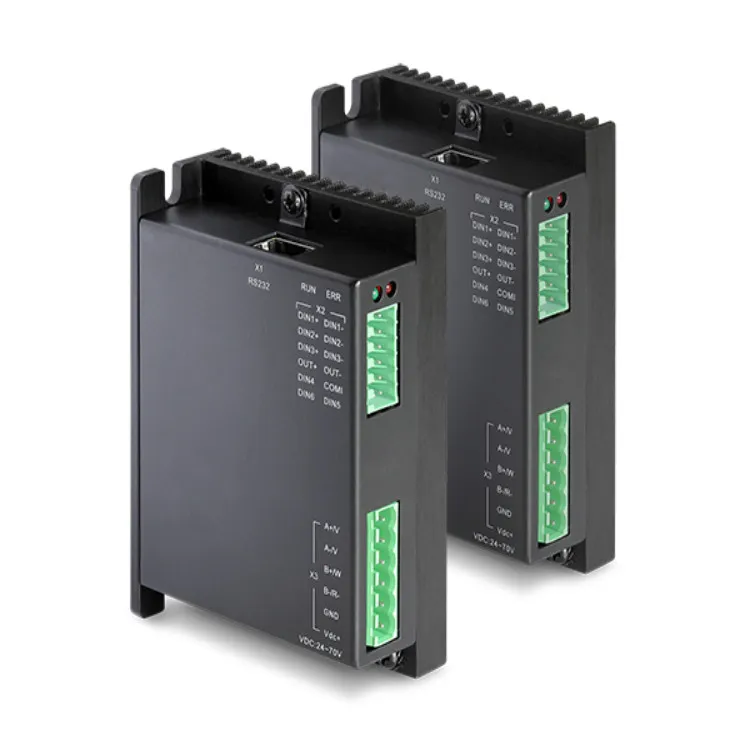
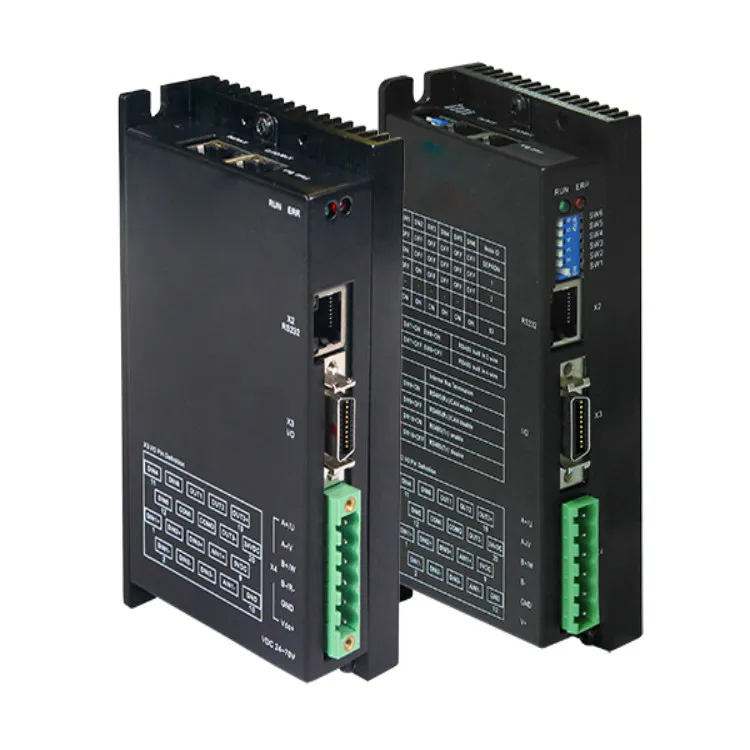
As a leading stepper system supplier, we offer a wide range of products that incorporate high - quality encoders. Our 2 Phase Stepper Motor is known for its smooth operation and high torque output. It is equipped with an encoder to ensure precise positioning and speed control. Our Field Bus Stepper Driver provides advanced control capabilities and can be easily integrated with various industrial networks. And our 3 Phase Stepper Motor offers higher efficiency and better performance in high - load applications, thanks to the encoder - based feedback system.
Contact Us for Procurement
If you are looking for a reliable stepper system with high - quality encoders, we are here to help. Our team of experts can provide you with detailed product information, technical support, and customized solutions to meet your specific requirements. Whether you are a small - scale manufacturer or a large - scale industrial enterprise, we have the right stepper system for you. Contact us today to start the procurement process and take your automation applications to the next level.
References
- "Stepper Motor Control and Applications" by Peter C. Sen
- "Encoder Handbook" by Renishaw
- Industry whitepapers on precision motion control systems