
Hey there! As a Siemens PLC supplier, I often get asked about the resolution of analog input and output in Siemens PLCs. So, I thought I'd write this blog to break it down for you in a simple and easy - to - understand way.
Let's start with the basics. What exactly is resolution when it comes to analog input and output in a Siemens PLC? Well, resolution refers to the smallest change in the analog signal that the PLC can detect (for input) or produce (for output). It's kind of like the "fineness" of the measurement or the control.
Understanding Analog Input Resolution
When we talk about analog input resolution in Siemens PLCs, we're looking at how precisely the PLC can measure an analog signal. For example, if you're measuring the temperature of a room using an analog temperature sensor connected to a Siemens PLC, the resolution determines how small a change in temperature the PLC can pick up.
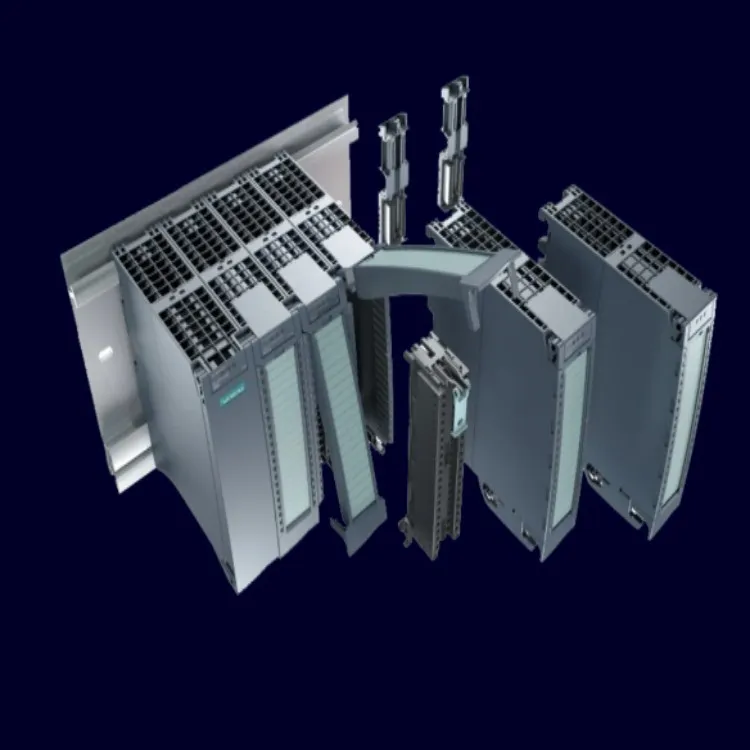
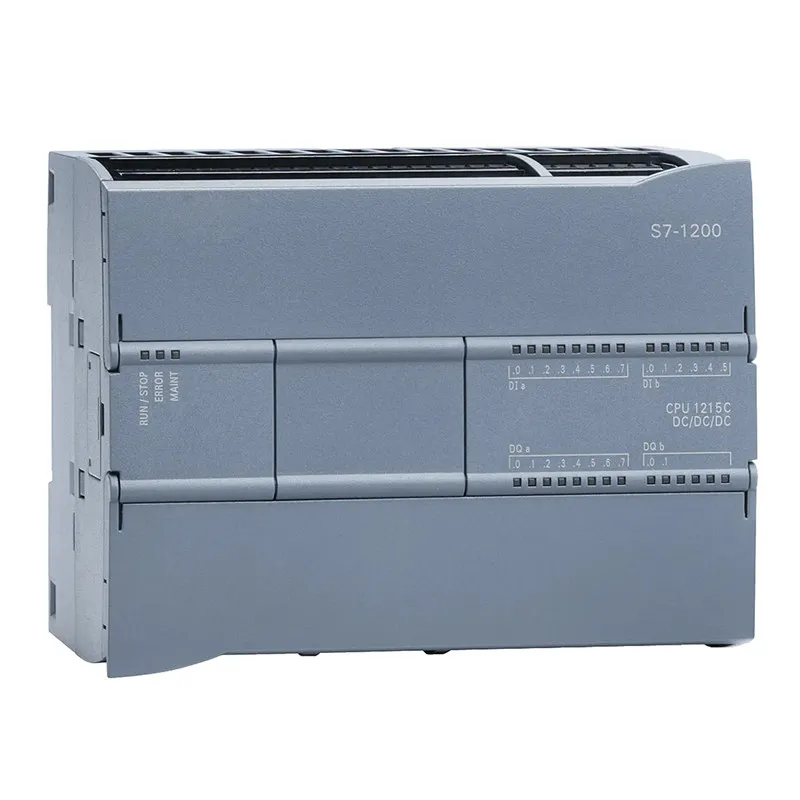
In Siemens PLCs like the Siemens PLC S7 200, Siemens PLC S7 1200, and Siemens PLC S7 1500, the resolution is often expressed in bits. The more bits, the higher the resolution.
For instance, a common resolution for some analog input modules in Siemens PLCs is 12 - bit. What does this mean? Well, a 12 - bit resolution means that the PLC can represent the analog input signal in 2^12 (which is 4096) different levels. If you're measuring a voltage range from 0 to 10 volts, each step represents a voltage change of 10V / 4096 ≈ 0.00244V or 2.44 mV. That's a pretty small change, and it allows for a relatively precise measurement.
Higher - bit resolutions, like 14 - bit or 16 - bit, offer even more precision. A 14 - bit resolution gives you 2^14 = 16384 levels, and a 16 - bit resolution gives you 2^16 = 65536 levels. With a 16 - bit resolution for the same 0 - 10V range, each step represents a voltage change of 10V / 65536 ≈ 0.0001526V or 0.1526 mV. This is extremely precise and is useful in applications where very accurate measurements are required, such as in scientific research or high - end manufacturing processes.
Factors Affecting Analog Input Resolution
There are a few factors that can affect the actual resolution you get in a real - world application. One of the main factors is noise. Electrical noise in the environment can cause fluctuations in the analog signal, making it difficult for the PLC to accurately detect small changes. To combat this, you can use shielding on the cables connecting the analog sensors to the PLC and add filtering circuits.
Another factor is the quality of the analog input module itself. Cheaper or lower - quality modules may have limitations in terms of their ability to accurately measure small changes in the signal, even if they are rated for a certain bit resolution.
Analog Output Resolution
Now, let's talk about analog output resolution. This is about how precisely the PLC can generate an analog signal. For example, if you're using a Siemens PLC to control the speed of a motor by outputting an analog voltage signal, the resolution determines how small a change in the output voltage the PLC can produce.
Just like with analog input, the resolution of analog output in Siemens PLCs is also often expressed in bits. A higher - bit resolution means the PLC can produce a more precise analog output.
Let's say you have a 12 - bit analog output module in a Siemens PLC. If you're trying to output a voltage in the range of 0 to 10V, the PLC can set the output voltage in 4096 different steps. This allows for a relatively fine - tuned control of the output.
However, similar to analog input, there are factors that can affect the actual performance of the analog output. One factor is the load connected to the output. If the load has a high impedance or is not well - matched to the output module, it can cause errors in the output signal.
Importance of Resolution in Different Applications
The resolution of analog input and output is crucial in different industrial applications. In process control, for example, accurate measurement and control of variables like temperature, pressure, and flow are essential. A high - resolution analog input can help detect small changes in these variables, allowing for better control and optimization of the process.
In the field of robotics, precise control of motor speeds and positions often requires high - resolution analog output. A small change in the output signal can result in a significant difference in the movement of the robot arm, so having a high - resolution output is necessary for accurate operation.
How to Choose the Right Resolution
When choosing a Siemens PLC for your application, you need to consider the required resolution. If your application only requires a rough measurement or control, a lower - resolution module may be sufficient. This can save you money as higher - resolution modules are usually more expensive.
However, if your application demands high precision, such as in medical equipment or aerospace applications, you'll need to go for a PLC with a high - resolution analog input and output.
Conclusion
In conclusion, the resolution of analog input and output in Siemens PLCs is a key factor in determining how accurately you can measure and control analog signals. Whether you're using a Siemens PLC S7 200, Siemens PLC S7 1200, or Siemens PLC S7 1500, understanding the resolution and how it works is essential for getting the best performance out of your PLC system.
If you're in the market for Siemens PLCs and need help choosing the right ones with the appropriate analog input and output resolution for your application, don't hesitate to reach out. We're here to assist you in making the right decision and ensuring that your industrial automation project runs smoothly. Contact us for a detailed discussion and procurement negotiation.
References
- Siemens official documentation on PLC analog modules
- Industrial automation textbooks on PLC programming and operation