
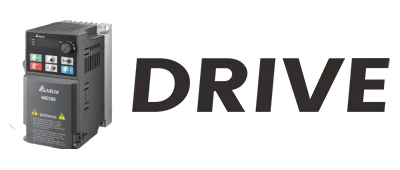
Hey there! As a supplier of DC servo motors, I've been in the thick of the industry for quite a while. One question that often pops up is, "What is the role of the controller in a DC servo motor system?" Well, let's dive right in and break it down.
First off, let's get a basic understanding of what a DC servo motor system is. It's a setup that includes a DC servo motor, a power supply, a controller, and often some feedback devices like encoders. The main goal of this system is to control the position, speed, or torque of the motor with high precision. And that's where the controller comes in – it's like the brain of the whole operation.
Precise Control of Motion
One of the primary roles of the controller in a DC servo motor system is to provide precise control of the motor's motion. Whether you're looking to move a robotic arm to a specific position or control the speed of a conveyor belt, the controller is responsible for making sure the motor does exactly what you want it to do.
The controller takes input signals from an external source, like a PLC (Programmable Logic Controller) or a human - machine interface. These signals tell the controller what the desired position, speed, or torque of the motor should be. Then, the controller compares this desired value with the actual value provided by the feedback device. If there's a difference, known as an error, the controller adjusts the electrical signals sent to the motor to minimize this error.
For example, if you're using a DC servo motor in a 3D printer to move the print head, the controller ensures that the motor moves the head to the exact position specified by the printing software. It constantly monitors the position feedback from an encoder and makes tiny adjustments to the motor's speed and direction to keep the print head on track.
Power Management
Another crucial role of the controller is power management. DC servo motors need a specific amount of electrical power to operate effectively. The controller regulates the voltage and current supplied to the motor based on the load requirements.
When the motor is starting up, it usually needs more power to overcome inertia. The controller can provide a higher initial voltage and current to get the motor moving smoothly. Once the motor reaches the desired speed or position, the controller reduces the power supply to a level that maintains the operation without wasting energy.
This power management not only helps in optimizing the performance of the motor but also extends its lifespan. By preventing over - current and over - voltage situations, the controller protects the motor from damage. For instance, in an industrial automation application where a DC servo motor is used to drive a heavy - duty conveyor, the controller ensures that the motor gets just the right amount of power to move the load efficiently.
Safety and Protection
Safety is a top priority in any motor system, and the controller plays a vital role in ensuring it. It has built - in protection mechanisms to safeguard the motor and the entire system from various faults.
Over - current protection is one of the most common features. If the current drawn by the motor exceeds a safe limit, perhaps due to a mechanical jam or a short - circuit, the controller immediately reduces or cuts off the power supply to the motor. This prevents the motor from overheating and potentially catching fire.
Over - temperature protection is also important. The controller monitors the temperature of the motor, and if it rises above a certain threshold, it takes action to cool it down or shut it off. Additionally, the controller can detect and protect against under - voltage situations, which can cause the motor to malfunction.
Compatibility and Integration
In today's complex industrial environments, it's essential for the DC servo motor system to be compatible with other equipment. The controller acts as an interface between the motor and other components in the system.
It can communicate with different types of input devices, such as sensors and switches, and output devices like indicators and actuators. The controller supports various communication protocols, allowing it to be integrated into larger automation systems.
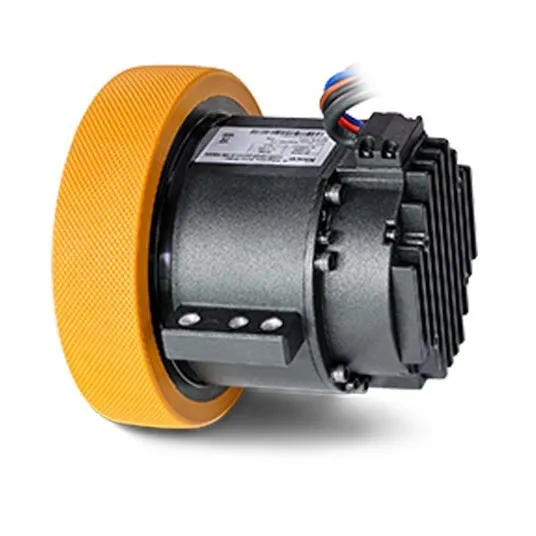
For example, if you're using a Integrated Servo Wheel in a mobile robot, the controller can communicate with the robot's navigation system to receive commands and send feedback on the motor's status. This seamless integration ensures that the entire system works together harmoniously.
Advanced Control Algorithms
Modern controllers often come with advanced control algorithms that enhance the performance of the DC servo motor system. These algorithms can improve the system's response time, accuracy, and stability.
One such algorithm is the PID (Proportional - Integral - Derivative) control algorithm. It calculates the error between the desired and actual values and uses three different terms – proportional, integral, and derivative – to adjust the control output. The proportional term provides an immediate response to the error, the integral term eliminates any steady - state error over time, and the derivative term predicts the future behavior of the error and helps in damping oscillations.
There are also more advanced algorithms like fuzzy logic control and neural network control, which can handle complex and non - linear systems more effectively. These algorithms can adapt to changing operating conditions and improve the overall performance of the DC servo motor system.
Different Types of Controllers for DC Servo Motors
There are several types of controllers available for DC servo motors, each with its own features and applications.
The Mini DC Servo Driver is a compact and cost - effective option. It's suitable for small - scale applications where space is limited, such as in consumer electronics or small robotics projects. It provides basic control functions and is easy to install and operate.
On the other hand, more powerful controllers are used in industrial applications. These controllers can handle higher power motors and offer more advanced features like multiple axes control and advanced communication protocols. For example, in a large - scale manufacturing plant where multiple DC servo motors are used to control different processes, a high - end controller can manage all the motors simultaneously and ensure coordinated operation.
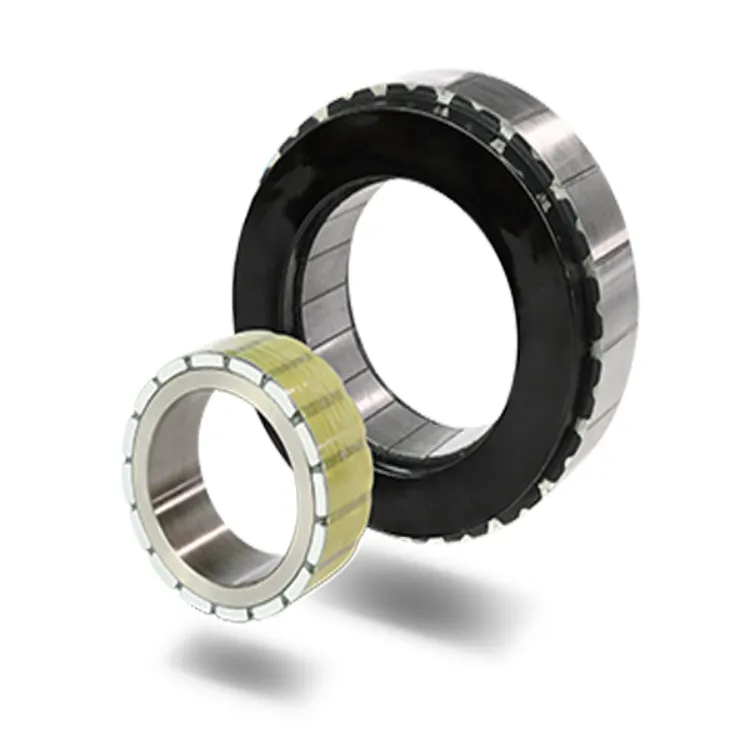
The Frameless Torque Motor also requires a specialized controller. These motors are designed for high - torque applications, and the controller needs to be able to provide the right amount of current and voltage to generate the required torque.
Why Choose Our DC Servo Motor Controllers
As a DC servo motor supplier, we offer high - quality controllers that are designed to meet the diverse needs of our customers. Our controllers are known for their reliability, precision, and ease of use.
We use the latest technology and advanced control algorithms in our controllers to ensure optimal performance of the DC servo motor systems. Our team of experts is always available to provide technical support and help you choose the right controller for your specific application.
Whether you're a small - scale hobbyist working on a DIY project or a large industrial manufacturer, we have the right solution for you. Our controllers are compatible with a wide range of DC servo motors and can be easily integrated into existing systems.
If you're interested in learning more about our DC servo motor controllers or have any questions about their role in your system, don't hesitate to get in touch. We're here to assist you in making the best choice for your project and to ensure that your DC servo motor system operates at its best. Contact us today to start a conversation about your procurement needs and let's work together to find the perfect solution for you.
References
- Dorf, R. C., & Bishop, R. H. (2017). Modern Control Systems. Pearson.
- Ogata, K. (2010). Modern Control Engineering. Prentice Hall.