
DC servo motors are widely used in various industrial and automation applications due to their high precision, excellent speed control, and torque characteristics. Feedback devices play a crucial role in the operation of DC servo motors, as they provide essential information about the motor's position, speed, and torque. This information is used by the motor controller to adjust the motor's performance and ensure accurate and stable operation. As a DC servo motor supplier, I will introduce some common types of feedback devices used in DC servo motors.
Encoders
Encoders are one of the most commonly used feedback devices in DC servo motors. They can be classified into two main types: incremental encoders and absolute encoders.
Incremental Encoders
Incremental encoders generate a series of pulses as the motor shaft rotates. The number of pulses is proportional to the angular displacement of the shaft. By counting these pulses, the controller can determine the motor's speed and the relative position of the shaft. Incremental encoders are relatively simple and cost - effective, making them suitable for many general - purpose applications.
The basic principle of an incremental encoder involves a rotating disk with evenly spaced slots or markings. As the disk rotates, a light source and a photodetector detect the passing of these slots, generating electrical pulses. The resolution of an incremental encoder is determined by the number of slots on the disk. Higher - resolution encoders can provide more accurate position and speed information.
For example, in a robotic arm application, an incremental encoder can be used to monitor the movement of each joint. The controller can use the encoder feedback to precisely control the speed and position of the joints, allowing the robotic arm to perform complex tasks with high accuracy.
Absolute Encoders
Absolute encoders, on the other hand, provide an absolute position value for the motor shaft at any given time. Unlike incremental encoders, which only provide relative position information, absolute encoders can immediately determine the exact position of the shaft without the need for a reference point or initialization.
Absolute encoders typically use a more complex coding scheme on the rotating disk. Each position on the disk corresponds to a unique digital code. When the encoder is powered on, the controller can read the code and directly obtain the shaft's position. This makes absolute encoders ideal for applications where precise position control is required, such as in CNC machines.
In a CNC milling machine, an absolute encoder can ensure that the cutting tool is always in the correct position, resulting in high - quality machining operations. The ability to know the exact position immediately after power - on also reduces setup time and improves overall productivity.
Tachometers
Tachometers are used to measure the rotational speed of the DC servo motor. They provide a voltage output that is proportional to the motor's speed. There are two main types of tachometers: DC tachometers and AC tachometers.
DC Tachometers
DC tachometers work based on the principle of electromagnetic induction. A permanent - magnet DC generator is coupled to the motor shaft. As the shaft rotates, the generator produces a DC voltage that is directly proportional to the speed of rotation.
The output voltage of a DC tachometer can be easily measured and used by the motor controller to adjust the motor's speed. DC tachometers are relatively simple and reliable, but they may be affected by temperature and magnetic field variations.
In a conveyor belt system, a DC tachometer can be used to monitor the speed of the motor driving the belt. If the speed deviates from the set value, the controller can adjust the motor's input voltage to maintain a constant speed, ensuring smooth and efficient operation of the conveyor system.
AC Tachometers
AC tachometers generate an AC voltage output that is proportional to the motor's speed. They are often based on the principle of a rotating magnetic field. The output frequency of an AC tachometer is related to the motor's speed.
AC tachometers are less affected by temperature and magnetic field variations compared to DC tachometers. They are commonly used in high - speed applications where accurate speed measurement is crucial.
For example, in a high - speed spindle motor used in a precision grinding machine, an AC tachometer can provide accurate speed feedback. The controller can then adjust the motor's power supply to maintain a stable and precise rotational speed, resulting in high - quality grinding operations.
Resolvers
Resolvers are electromagnetic devices that can provide both position and speed information for DC servo motors. They consist of a stator and a rotor. The stator has two or more windings, and the rotor is connected to the motor shaft.
When an AC excitation voltage is applied to one of the stator windings, an induced voltage is generated in the other stator windings. The magnitude and phase of the induced voltage depend on the angular position of the rotor. By measuring these voltages, the controller can determine the position of the motor shaft.
Resolvers are known for their robustness and reliability. They can operate in harsh environments, including high - temperature, high - vibration, and high - humidity conditions. This makes them suitable for applications in the aerospace and automotive industries.
In an aircraft's flight control system, a resolver can be used to monitor the position of control surfaces such as ailerons and elevators. The reliable position feedback provided by the resolver ensures the safe and accurate operation of the aircraft.
Hall Effect Sensors
Hall effect sensors are used to detect the position and speed of the motor. They work based on the Hall effect, which is the generation of a voltage difference across a conductor when it is placed in a magnetic field and a current is passed through it.
In a DC servo motor, Hall effect sensors are often used to detect the position of the rotor magnets. By placing Hall effect sensors around the motor's stator, the controller can determine the position of the rotor and adjust the current in the stator windings accordingly.
Hall effect sensors are small, inexpensive, and have a fast response time. They are commonly used in low - cost and high - volume applications, such as in consumer electronics and small - scale automation systems.
For example, in a small - sized robotic toy, Hall effect sensors can be used to control the movement of the toy's joints. The sensors provide position feedback to the controller, allowing the toy to perform simple movements accurately.
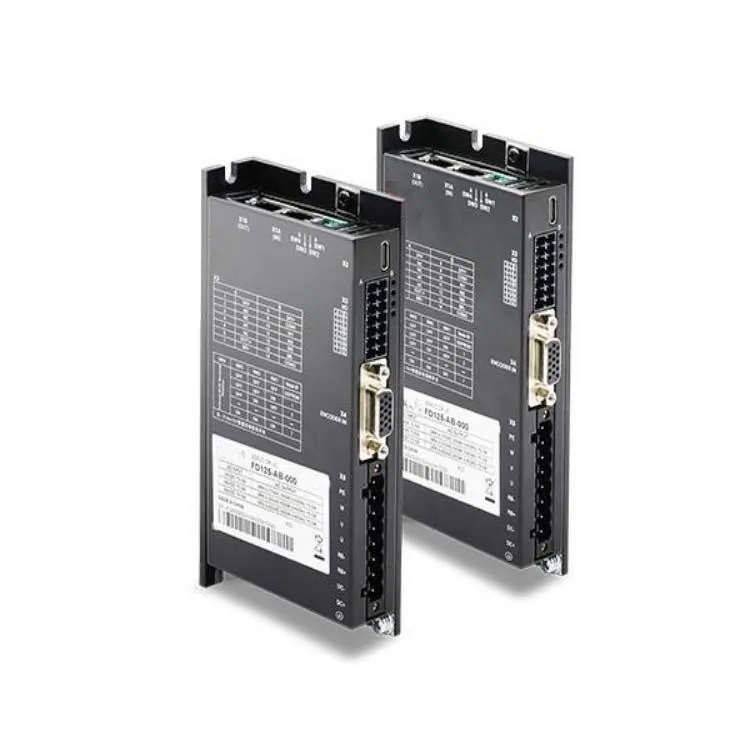
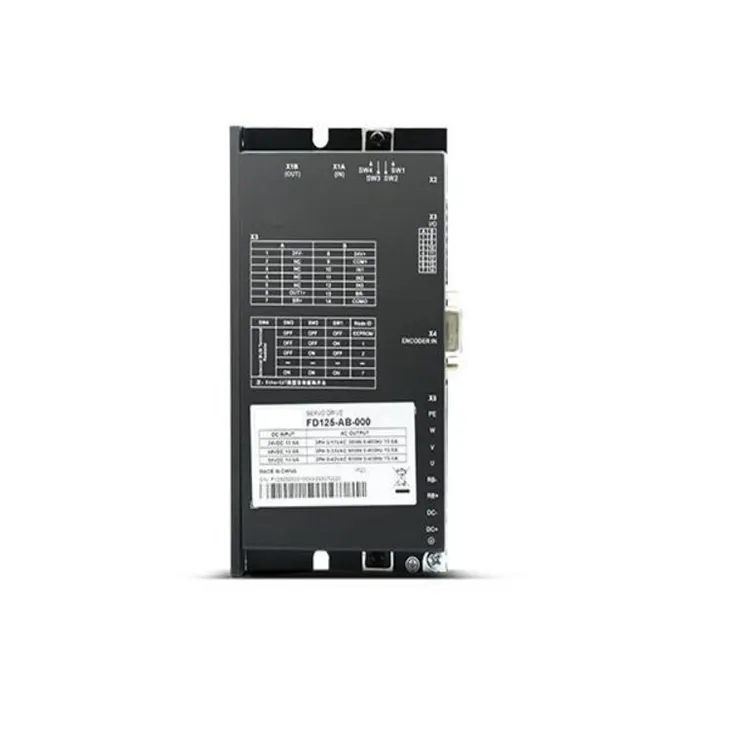
As a DC servo motor supplier, we offer a wide range of products that are compatible with different types of feedback devices. Our Mini DC Servo Driver is designed to work seamlessly with encoders, tachometers, and other feedback devices, providing precise control of DC servo motors. Our Low - voltage Servo Motor is suitable for applications where power consumption needs to be minimized, and the feedback devices ensure accurate operation. Additionally, our Frameless Torque Motor offers high - torque performance with the help of advanced feedback technologies.
If you are looking for high - quality DC servo motors and related feedback devices for your specific application, we are here to help. We can provide professional advice on the selection of the most suitable feedback device and motor combination for your needs. Contact us for procurement and let's discuss how we can meet your requirements to achieve optimal performance in your projects.
References
- Dorf, R. C., & Bishop, R. H. (2017). Modern Control Systems. Pearson.
- Krause, P. C., Wasynczuk, O., & Sudhoff, S. D. (2013). Analysis of Electric Machinery and Drive Systems. Wiley.
- Johnson, R. A. (2006). Servo Motors and Industrial Control Theory. Elsevier.