
As a trusted handheld HMI supplier, I've witnessed firsthand the diverse array of displays used in these devices. Each type of display brings unique features and benefits to the table, catering to different application requirements and user preferences. In this blog, we'll explore the various types of displays commonly found in handheld HMIs and understand how they enhance the user experience and functionality.
LCD (Liquid Crystal Display)
LCDs are one of the most prevalent display technologies in handheld HMIs. They offer a good balance between cost, performance, and power consumption. LCDs work by controlling the passage of light through liquid crystals, which are sandwiched between two layers of glass. By applying an electric current to specific segments of the liquid crystals, the display can create images and text.
One of the key advantages of LCDs is their versatility. They can be found in a wide range of sizes, resolutions, and color depths, making them suitable for various applications. Whether you need a small, low-resolution display for a simple control panel or a large, high-resolution display for a complex monitoring system, there's an LCD option available.
LCDs also have relatively low power consumption compared to other display technologies, which is crucial for handheld devices that rely on battery power. This extended battery life allows users to operate the HMI for longer periods without having to recharge frequently.
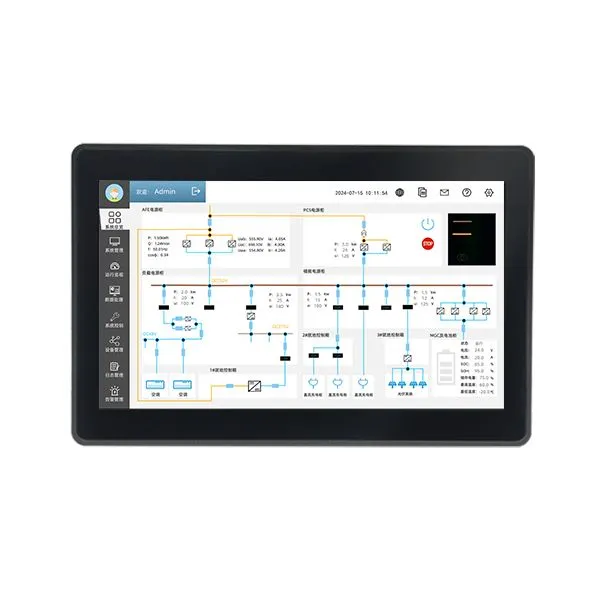
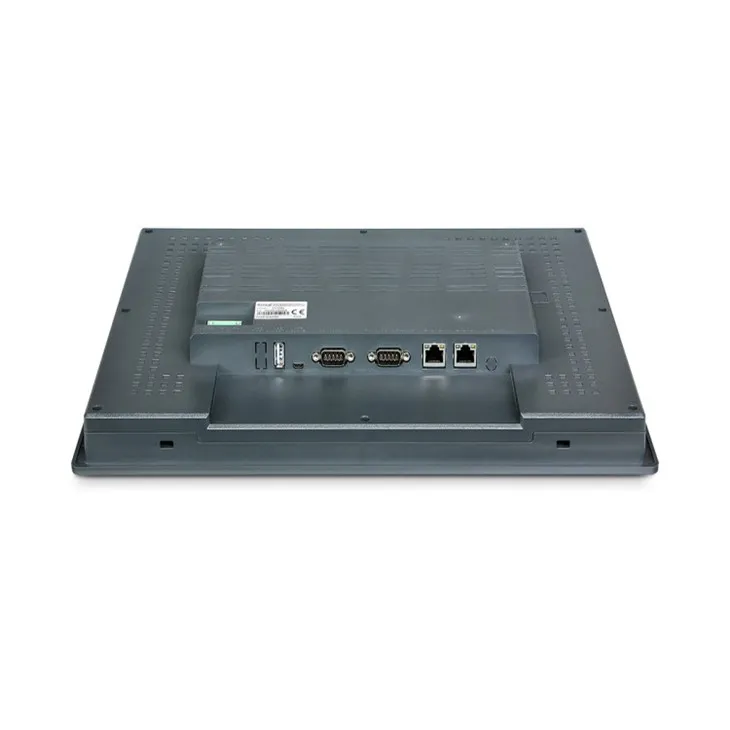
Another benefit of LCDs is their ability to provide sharp and clear images. With advancements in technology, modern LCDs can achieve high pixel densities, resulting in crisp text and vibrant colors. This makes them ideal for applications where visual clarity is essential, such as industrial automation, medical devices, and automotive systems.
However, LCDs do have some limitations. They typically have a narrow viewing angle, which means that the image quality may degrade when viewed from an angle. Additionally, LCDs can be affected by ambient light, especially in bright sunlight, which can make the display difficult to read.
TFT-LCD (Thin-Film Transistor Liquid Crystal Display)
TFT-LCDs are an advanced type of LCD that offers improved performance compared to traditional LCDs. They use thin-film transistors to control each individual pixel on the display, allowing for faster response times and higher refresh rates.
One of the main advantages of TFT-LCDs is their ability to display high-quality images and videos. With their fast response times, TFT-LCDs can handle dynamic content without ghosting or blurring, making them suitable for applications such as multimedia playback, gaming, and video surveillance.
TFT-LCDs also have a wider viewing angle compared to traditional LCDs, which means that the image quality remains consistent even when viewed from different angles. This makes them more user-friendly, especially in situations where multiple users need to view the display simultaneously.
In addition, TFT-LCDs can support higher resolutions and color depths, resulting in more detailed and realistic images. This makes them ideal for applications that require accurate color representation, such as graphic design, photo editing, and medical imaging.
However, TFT-LCDs are generally more expensive than traditional LCDs due to their advanced technology and higher manufacturing costs. They also consume more power, which can reduce the battery life of handheld devices.
OLED (Organic Light-Emitting Diode)
OLEDs are a relatively new display technology that is gaining popularity in handheld HMIs. Unlike LCDs, which rely on a backlight to illuminate the display, OLEDs emit light directly from organic compounds when an electric current is applied.
One of the key advantages of OLEDs is their ability to produce deep blacks and high contrast ratios. Since each pixel on an OLED display can be individually controlled, it can be turned off completely, resulting in true black colors. This creates a more immersive viewing experience, especially when watching movies or playing games.
OLEDs also have a faster response time compared to LCDs, which means that they can handle fast-moving content without ghosting or blurring. This makes them ideal for applications such as sports broadcasting, action games, and virtual reality.
Another benefit of OLEDs is their flexibility. They can be made into flexible and curved displays, which opens up new possibilities for product design and innovation. For example, handheld HMIs with flexible OLED displays can be bent or folded, making them more portable and convenient to use.
However, OLEDs do have some limitations. They are generally more expensive than LCDs, especially for larger display sizes. They also have a shorter lifespan compared to LCDs, especially when used in high-brightness applications. Additionally, OLEDs can be more susceptible to burn-in, which occurs when static images are displayed on the screen for extended periods of time.
E Ink (Electronic Ink)
E Ink is a unique display technology that is commonly used in e-readers and other devices that require low power consumption and high readability in various lighting conditions. E Ink displays work by using tiny microcapsules filled with charged black and white particles. By applying an electric field to the microcapsules, the particles can be moved to the surface of the display, creating an image.
One of the main advantages of E Ink is its extremely low power consumption. Since E Ink displays only consume power when the image on the screen changes, they can operate for weeks or even months on a single battery charge. This makes them ideal for handheld devices that are used infrequently or for long periods of time without access to a power source.
E Ink displays also have excellent readability in various lighting conditions, including direct sunlight. Unlike LCDs, which can be difficult to read in bright sunlight, E Ink displays reflect light like paper, making them easy to read even in outdoor environments.
Another benefit of E Ink is its ability to provide a paper-like reading experience. The display has a matte finish and a high contrast ratio, which makes the text and images look sharp and clear. This makes E Ink displays ideal for e-books, newspapers, and other reading materials.
However, E Ink displays have some limitations. They have a slow response time, which means that they are not suitable for applications that require fast-moving content, such as videos or games. They also have a limited color range, typically only displaying black and white or grayscale images.
Choosing the Right Display for Your Handheld HMI
When selecting a display for your handheld HMI, there are several factors to consider. These include the application requirements, user preferences, budget, and environmental conditions.
If you need a display for a simple control panel or a device that requires low power consumption, an LCD or E Ink display may be the best choice. These displays offer good performance at a reasonable cost and can provide long battery life.
If you need a display for a multimedia device or a system that requires high-quality images and videos, a TFT-LCD or OLED display may be more suitable. These displays offer faster response times, higher resolutions, and better color accuracy, but they are generally more expensive and consume more power.
In addition to the display technology, you also need to consider the size, resolution, and color depth of the display. The size of the display should be appropriate for the application and the user's needs. A larger display may provide more screen real estate, but it may also make the device heavier and less portable.
The resolution of the display determines the level of detail and clarity of the images and text. A higher resolution display will provide sharper and more detailed images, but it may also require more processing power and memory.
The color depth of the display determines the number of colors that can be displayed on the screen. A higher color depth will provide more vibrant and realistic colors, but it may also increase the file size of the images and videos.
Finally, you need to consider the environmental conditions in which the handheld HMI will be used. If the device will be used in a harsh industrial environment, you may need a display that is resistant to dust, water, and extreme temperatures. For example, a Wide Temperature HMI can operate in a wide range of temperatures, from -20°C to 60°C, making it suitable for outdoor and industrial applications.
If the device will be used in an IoT (Internet of Things) environment, you may need a display that is compatible with IoT technologies and can communicate with other devices and systems. For example, an Internet Of Things Touch Screen can connect to the internet and interact with other IoT devices, allowing for remote monitoring and control.
Conclusion
In conclusion, there are several types of displays available for handheld HMIs, each with its own unique features and benefits. When choosing a display for your handheld HMI, it's important to consider the application requirements, user preferences, budget, and environmental conditions. By selecting the right display, you can enhance the user experience, improve the functionality of the device, and increase its overall value.
If you're interested in learning more about handheld HMIs or need help selecting the right display for your application, please don't hesitate to contact us. Our team of experts can provide you with detailed information and guidance to help you make an informed decision. We look forward to working with you to meet your handheld HMI needs.
References
- "Display Technologies for Handheld Devices." DisplayMate Technologies, 2023.
- "Liquid Crystal Displays (LCDs)." Wikipedia, 2023.
- "Thin-Film Transistor Liquid Crystal Displays (TFT-LCDs)." Wikipedia, 2023.
- "Organic Light-Emitting Diodes (OLEDs)." Wikipedia, 2023.
- "Electronic Ink (E Ink)." Wikipedia, 2023.